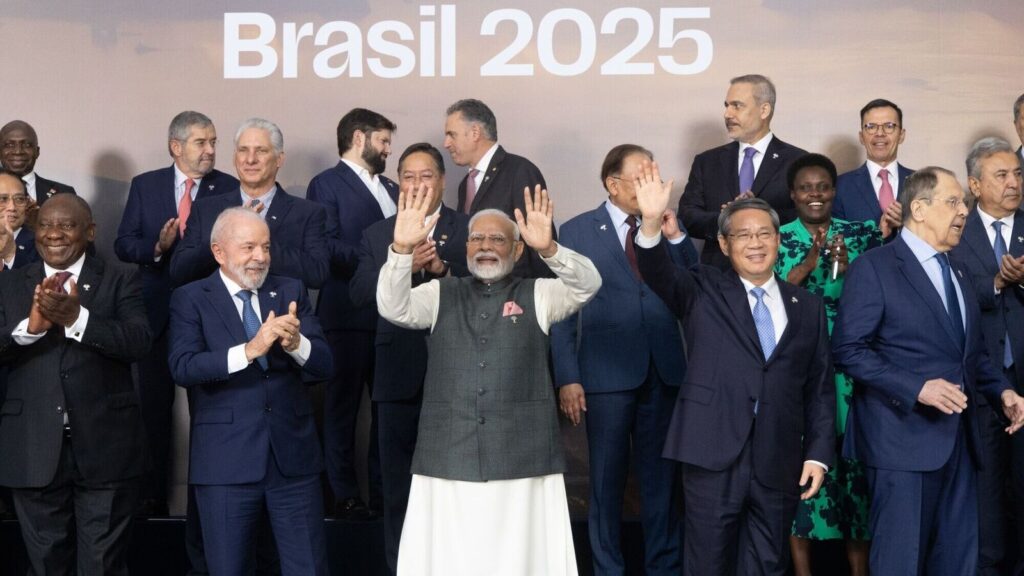
Introduction to BRICS
The **BRICS Global South** initiative stands as a formidable association of major emerging economies: Brazil, Russia, India, China, and South Africa. The genesis of this influential bloc can be traced back to 2001, when Jim O’Neill, then chief economist at Goldman Sachs, coined the term “BRIC.” His foresight highlighted the substantial economic growth trajectories and untapped potential of Brazil, Russia, India, and China, recognizing them as nations collectively poised to redefine the global economic architecture [Source: Goldman Sachs]. These economies were not merely growing; they were emerging as significant players whose combined might could fundamentally reshape international trade, finance, and geopolitics [Source: Council on Foreign Relations].
What began as an economic concept swiftly evolved into a tangible political and economic alliance. The formal political grouping convened its inaugural BRIC leaders’ summit in Yekaterinburg, Russia, in 2009 [Source: BRICS Russia]. This marked a pivotal moment, transforming an analytical acronym into a committed intergovernmental forum. The group solidified its current form with the inclusion of South Africa in 2010, at which point the acronym officially became “BRICS” [Source: BRICS Russia]. The expansion underscores the group’s strategic vision to encompass more voices from the emerging world and enhance its collective leverage.
The core mandate of BRICS extends beyond mere economic collaboration; it aims to champion a more multipolar world order, actively challenging the long-standing dominance of traditional Western powers [Source: Carnegie Endowment for International Peace]. This commitment to reshaping global governance is central to the **BRICS Global South** narrative. The alliance is dedicated to fostering deep economic cooperation, enhancing bilateral and multilateral trade relations, and collectively addressing a myriad of global challenges from the distinct perspective of emerging economies [Source: UNDP Brazil]. This includes issues ranging from climate change and sustainable development to food security and international financial stability, all viewed through the lens of equitable global partnership.
In the intricate tapestry of global politics, BRICS wields considerable influence, largely attributable to the immense collective economic size, vast population, and burgeoning geopolitical weight of its member states. The combined BRICS nations represent over 40% of the world’s population and contribute approximately a quarter of the global GDP [Source: Statista]. This formidable collective power empowers BRICS to assume a pivotal role in various international forums, advocating vigorously for systemic reforms within global governance and financial institutions. A prime example of this assertive stance is the establishment of the New Development Bank (NDB) in 2014 by BRICS members. The NDB represents a significant stride towards creating an alternative to existing Western-dominated financial institutions such as the World Bank and the International Monetary Fund [Source: New Development Bank]. The NDB’s primary objective is to finance infrastructure and sustainable development projects, primarily within its member states and other developing countries, thereby channeling resources directly to the Global South. The recent expansion of BRICS, with new members joining in 2024, further solidifies its growing significance and unwavering ambition to reshape global economic and political dynamics, cementing its role as a key advocate for the **BRICS Global South** agenda [Source: Council on Foreign Relations].
The Rise of the Global South
The term “Global South” broadly delineates a collection of countries typically characterized by lower levels of economic development, predominantly situated across Asia, Africa, and Latin America. This concept stands in stark contrast to the “Global North,” which generally encompasses economically advanced nations located primarily in North America, Europe, and certain regions of Asia and Oceania. While the term carries geographical connotations, its true essence lies more deeply in shared historical experiences of colonialism, persistent economic inequality, and evolving geopolitical aspirations, rather than strict geographical demarcation [Source: Carnegie Endowment]. The **BRICS Global South** narrative is inextricably linked to this collective identity and shared historical trajectory.
Historically, the conceptualization of the Global South emerged from the Cold War era’s “Third World” framework. This earlier categorization grouped countries that chose non-alignment with either the capitalist West or the communist East. Following the end of the Cold War, the term “Global South” gained increasing prominence, signaling a shift in focus from ideological alignment to a broader emphasis on economic and political solidarity among these nations [Source: Council on Foreign Relations]. It acknowledges a common legacy of exploitation and a collective aspiration for a more equitable and just global order. This includes a fervent desire for self-determination and the ability to pursue development pathways that prioritize national interests and sustainable growth. For instance, India, a pivotal nation within both the Global South and BRICS, has been at the forefront of pursuing its clean energy transition, showcasing a commitment to economic independence and sustainable development goals widely shared by many nations in this group [Source: WorldGossip.net].
In the contemporary international relations landscape, the Global South commands significant importance owing to its collective economic weight, vast demographic size, and escalating geopolitical influence. These nations are increasingly asserting their collective voices on a diverse array of global issues, spanning from climate change and international trade to security and human rights [Source: Stimson Center]. They consistently advocate for robust multilateralism, comprehensive reform of antiquated international institutions, and the establishment of a more balanced global power dynamic. The concerted actions and unified stances of the Global South can profoundly shape global policies and discourse, influencing everything from complex climate negotiations—such as the intricate dynamics between the US and China on emissions, which significantly impact global climate policy [Source: WorldGossip.net]—to the very future of global governance and international law. The rise of the **BRICS Global South** represents a fundamental shift in the distribution of global power, signaling an era where diverse perspectives from emerging economies demand recognition and influence.
Economic Cooperation Among BRICS Nations
Economic cooperation forms the bedrock of the **BRICS Global South** agenda, driving initiatives designed to foster mutual growth, reduce reliance on traditional financial systems, and promote a more balanced global economic landscape. At the forefront of this economic collaboration is the New Development Bank (NDB), established by BRICS members in 2014. The NDB was conceived as a multilateral development bank to mobilize resources for infrastructure and sustainable development projects in BRICS and other emerging economies, offering an alternative to existing institutions like the World Bank [Source: New Development Bank]. Since its inception, the NDB has approved numerous projects across diverse sectors, including renewable energy, transportation, and water infrastructure, totaling billions of dollars, significantly contributing to the development goals of the Global South [Source: Asian Development Bank – NDB Collaboration].
Beyond the NDB, BRICS nations actively engage in efforts to boost intra-BRICS trade and investment. Despite geographical distances and diverse economic structures, member states are committed to reducing trade barriers and promoting value-added trade. Initiatives such as the BRICS Economic Partnership Strategy aim to enhance cooperation in areas like e-commerce, digital economy, and industrial production [Source: BRICS Russia – Official Documents]. This strategic focus is designed to diversify supply chains, foster technological collaboration, and create new avenues for economic growth that benefit all members, particularly in the context of the broader **BRICS Global South** framework. For instance, discussions around promoting trade in local currencies have gained momentum, aiming to mitigate foreign exchange risks and reduce dependence on the U.S. dollar in international transactions. This “de-dollarization” push is seen as a key step towards financial autonomy for the Global South [Source: Brookings Institution – BRICS De-dollarization].
Another critical aspect of BRICS economic cooperation is the Contingent Reserve Arrangement (CRA), established in 2014. The CRA is a framework for providing liquidity support to members in times of balance of payments pressures, serving as a financial safety net and an alternative to traditional IMF lending, which often comes with stringent conditionalities [Source: IMF – BRICS CRA]. This arrangement underscores the BRICS commitment to building robust financial architecture that serves the interests of developing economies. Furthermore, BRICS nations consistently advocate for reforms in global economic governance, including a greater voice for emerging markets and developing countries within international financial institutions like the IMF and the World Bank. They champion a more democratic and representative global economic order that better reflects the current geopolitical realities and the growing economic might of the **BRICS Global South** [Source: Chatham House – BRICS Plus Economic Clout]. This sustained emphasis on economic solidarity and institutional reform highlights the bloc’s ambition to create a global economic environment that is more inclusive, stable, and equitable for all.
Political Influence of BRICS
The political influence of the **BRICS Global South** bloc is steadily expanding, profoundly shaping the discourse and dynamics of international relations. Originally conceived as an economic grouping, BRICS has matured into a significant political force, advocating for a more balanced and multipolar world order that challenges the traditional dominance of Western powers [Source: Carnegie Endowment for International Peace]. This collective voice is particularly impactful within major global forums where BRICS members play increasingly prominent roles.
At the United Nations, BRICS nations often coordinate their positions on critical international issues, pushing for reforms in the Security Council to ensure greater representation for developing countries and emerging economies [Source: United Nations – Security Council Reform]. They consistently emphasize principles such as multilateralism, non-interference in internal affairs, and respect for national sovereignty, which are cornerstones of the foreign policies of many Global South nations. Their unified stance on various resolutions and international treaties often aims to counteract unilateral tendencies and foster a more collaborative approach to global problem-solving. This alignment reflects a shared desire among the **BRICS Global South** nations to have their perspectives heard and integrated into global policy-making processes.
Beyond the UN, BRICS plays a crucial role in the G20, where its members form a significant voting bloc that can influence economic and financial policy decisions. They often advocate for policies that prioritize inclusive growth, sustainable development, and financial stability, specifically from the perspective of emerging markets [Source: G20 Official Website – BRICS Role]. This platform allows them to collectively push for reforms that address systemic imbalances in the global financial architecture and promote a more equitable distribution of economic opportunities. The expansion of BRICS to include new members like Saudi Arabia, Iran, and the UAE further bolsters its geopolitical leverage, particularly in energy markets and regional security matters, amplifying its political clout on the world stage [Source: Council on Foreign Relations].
Furthermore, BRICS nations have become increasingly vocal on issues of global governance, human rights, and climate change, often presenting a collective counter-narrative to those put forth by established Western powers. While internal differences exist among members, their shared commitment to a more representative international system provides a powerful impetus for joint action. For instance, their coordinated efforts on climate finance and technology transfer within multilateral climate negotiations underscore their resolve to address global challenges in a manner that acknowledges the historical responsibilities of developed nations and the developmental needs of the Global South [Source: UNFCCC – BRICS Climate Finance Call]. This growing political influence of the **BRICS Global South** is not merely about challenging existing power structures but actively building alternative frameworks and fostering new alliances that better reflect the diverse interests of the world’s majority.
Cultural Exchange and Connectivity
Cultural exchange and connectivity are vital, though often understated, pillars of the **BRICS Global South** alliance, fostering deeper understanding, mutual respect, and people-to-people bonds among member states. While economic and political dimensions often dominate headlines, the promotion of cultural diplomacy is crucial for building lasting solidarity and a shared identity within the bloc and extending its influence throughout the Global South. These initiatives range from high-level cultural festivals to grassroots educational and tourism programs, all designed to bridge cultural divides and celebrate diversity.
One significant aspect of cultural cooperation is the organization of joint cultural events and festivals. The BRICS Cultural Festival, for instance, serves as a platform to showcase the rich artistic heritage, traditions, music, and dance forms of each member nation [Source: Ministry of External Affairs, India – BRICS Cultural Festival]. These festivals not only entertain but also provide opportunities for artists, performers, and cultural practitioners to collaborate, learn from each other, and present a united cultural front to the world. Similarly, film festivals, such as the BRICS Film Festival, promote the exchange of cinematic works, allowing audiences to gain insights into the social realities and narratives of partner countries [Source: Press Information Bureau, India – BRICS Film Festival]. Such exchanges contribute significantly to strengthening the cultural fabric of the **BRICS Global South** relationship.
Educational cooperation and youth exchanges are also paramount in building long-term connectivity. BRICS universities frequently engage in academic partnerships, student exchange programs, and joint research initiatives, particularly in fields relevant to sustainable development and technological advancement [Source: University Grants Commission, India – BRICS Education Cooperation]. These programs enable students and academics to experience different educational systems, foster cross-cultural competencies, and build networks that may lead to future collaborations. Scholarships and fellowships are often made available to encourage greater mobility among students from BRICS and other Global South nations, aiming to cultivate a new generation of leaders who understand and champion the bloc’s shared vision.
Furthermore, tourism promotion within the BRICS nations is a key area of focus, encouraging citizens to explore the diverse landscapes, historical sites, and vibrant cultures of partner countries. This not only boosts local economies but also fosters direct people-to-people interaction and mutual appreciation [Source: BRICS Russia – Tourism Strategy]. Digital platforms and social media campaigns are increasingly utilized to promote these exchanges, making cultural content more accessible and engaging for a wider audience. Through these multifaceted cultural and educational initiatives, the **BRICS Global South** aims to weave a tighter tapestry of interconnectedness, ensuring that the alliance is built on a foundation of shared understanding and collective human experience, beyond just economic and political interests.
Challenges Facing BRICS
Despite its burgeoning influence and ambitious agenda, the **BRICS Global South** alliance faces a multitude of challenges that could impede its cohesion and effectiveness. These challenges stem from the inherent diversity of its member states, the complexities of international politics, and the internal dynamics within the bloc itself. Navigating these hurdles will be crucial for BRICS to fully realize its potential as a counterweight to established global powers and a voice for the Global South.
One of the primary challenges is the significant economic disparity and varying developmental models among the BRICS nations. While all are emerging economies, there are vast differences in their GDP per capita, industrial bases, and levels of technological advancement. China, for instance, is an economic powerhouse with a highly developed manufacturing sector, whereas South Africa, while a regional leader, faces different developmental challenges [Source: World Bank – South Africa Overview]. These disparities can lead to divergent national interests and priorities, making it difficult to forge a unified economic strategy or common approach to global trade and investment. The varying economic trajectories within the **BRICS Global South** necessitate flexible cooperation mechanisms that can accommodate diverse needs and capacities.
Political differences and geopolitical rivalries also pose substantial challenges. Despite a shared desire for a multipolar world, individual BRICS members have distinct foreign policy objectives and, at times, bilateral tensions. The ongoing border disputes and strategic competition between India and China, for example, can complicate efforts to present a united front on certain geopolitical issues [Source: Council on Foreign Relations]. Furthermore, some members maintain stronger ties with Western nations than others, leading to a complex web of alliances and allegiances that can prevent cohesive action. Achieving consensus on sensitive political matters, such as regional conflicts or international sanctions, can therefore be a slow and arduous process, sometimes resulting in watered-down statements or non-committal positions from the **BRICS Global South** forum [Source: Stimson Center].
Another challenge lies in the institutional capacity and bureaucratic efficiency of the BRICS framework itself. While the New Development Bank and the Contingent Reserve Arrangement are significant achievements, the broader coordination mechanisms for other areas of cooperation can sometimes lack the necessary structure or funding to effectively implement ambitious initiatives. Critics also point to a lack of transparency in some decision-making processes and the potential for a “big brother” dynamic, particularly concerning China’s dominant economic size within the group [Source: Carnegie Endowment for International Peace]. Overcoming these challenges will require continuous commitment from all members to foster internal trust, develop robust institutional frameworks, and ensure that the **BRICS Global South** narrative remains inclusive and genuinely representative of all its diverse members’ interests and aspirations.
Future of BRICS and the Global South
The future trajectory of the **BRICS Global South** alliance points towards a continued and amplified push for a more inclusive, representative, and multipolar international system. The recent expansion of the BRICS group, which as of January 2024 welcomed new members such as Egypt, Ethiopia, Iran, Saudi Arabia, and the United Arab Emirates, unequivocally signals its growing influence and ambition [Source: Carnegie Endowment for International Peace]. This strategic enlargement aims to directly challenge the existing unipolar system, which has largely been dominated by the United States and its traditional allies. The inclusion of key oil-producing nations like Saudi Arabia, Iran, and the UAE significantly enhances BRICS’ economic leverage, particularly in global energy markets, thereby granting it greater strategic depth and influence over critical resources.
Concurrently, the broader Global South, encompassing a vast array of countries primarily across Asia, Africa, and Latin America, is increasingly asserting its collective voice in global affairs. This pivotal shift is propelled by a profound desire for greater equity within international institutions, accelerated economic development, and a more balanced global power dynamic [Source: JSTOR]. The deepening collaboration between BRICS and the wider Global South is widely perceived as a potent mechanism to achieve these overarching goals, potentially leading to fundamental reforms in existing global governance structures and establishing new, more equitable ones. The alignment of the **BRICS Global South** agenda is central to this evolving landscape.
Looking ahead, the combined momentum of BRICS and the Global South suggests several key transformations:
* **Economic Reordering:** There is growing speculation and active pursuit of the development of alternative financial systems and robust trade mechanisms specifically designed to reduce reliance on the US dollar [Source: Carnegie Endowment for International Peace]. This could involve promoting local currency trade, developing new cross-border payment systems, and strengthening regional economic blocs. Such initiatives are envisioned to bolster the resilience of regional economies and foster new trade partnerships that bypass traditional Western-dominated financial channels. This vision complements ongoing discussions around India’s clean energy transition and its broader economic implications, as thoroughly explored in India’s Clean Energy Transition: The Economics of a Green Future, highlighting the pursuit of sustainable economic independence.
* **Geopolitical Influence:** The expanded BRICS group is poised to assume an even more significant role in international decision-making bodies. This enhanced presence will enable them to vigorously advocate for the distinct interests and perspectives of the Global South, thereby contributing to a meaningful rebalancing of global power. This assertive stance promises to introduce a more diverse array of perspectives to critical global challenges, including climate change, where complex dynamics like the US-China emissions relationship also play a pivotal role, as comprehensively discussed in US-China Emissions: A Climate Dynamic. The **BRICS Global South** collective aims to ensure that development priorities and climate justice are central to international climate action.
* **Shaping International Norms:** As the collective power and cohesion of BRICS and the Global South continue to grow, they are increasingly likely to challenge long-established international norms and frameworks. Their agenda will push for comprehensive reforms that more accurately reflect their priorities and values, including fundamental debates on sovereignty, the principle of non-interference in internal affairs, and a more equitable distribution of global resources and benefits. This transformative influence seeks to dismantle colonial legacies and build a truly democratic and inclusive international order.
Despite these promising prospects, significant challenges persist. The immense diversity within the Global South, encompassing a wide spectrum of political systems, varying levels of economic development, and often competing national interests, presents a formidable hurdle to achieving perfectly cohesive action. Furthermore, internal disagreements and existing geopolitical rivalries within the BRICS bloc itself could potentially impede its overall effectiveness and slow down the pace of its collective agenda [Source: Council on Foreign Relations]. Nevertheless, the increasing collaboration and assertiveness demonstrated by the **BRICS Global South** indicate a profound and enduring shift in the landscape of global affairs, pointing towards a future where power is more broadly distributed, and diverse voices hold significantly greater sway in shaping the world’s destiny.
Sources
- Asian Development Bank – New Development Bank (NDB): BRICS Countries as Partners for Development Amidst Global Uncertainties
- BRICS Russia – About BRICS
- BRICS Russia – Official Documents
- BRICS Russia – BRICS Tourism Strategy
- Brookings Institution – BRICS De-dollarization: Challenges and Prospects
- Carnegie Endowment for International Peace – BRICS and the New World Order
- Carnegie Endowment for International Peace – What Is the Global South, and What Does It Mean for Climate Policy?
- Carnegie Endowment for International Peace – BRICS and the Global South’s New World Order
- Chatham House – BRICS Plus: How New Members Could Boost the Bloc’s Economic Clout
- Council on Foreign Relations – BRICS
- Council on Foreign Relations – BRICS: An Overview
- Council on Foreign Relations – The Global South
- G20 Official Website – BRICS Role in G20
- Goldman Sachs – The BRICs and Global Economic Convergence
- IMF – The BRICS Contingent Reserve Arrangement: An Alternative to the IMF?
- JSTOR – The Rise of the Global South and Its Implications for International Relations
- Ministry of External Affairs, India – BRICS Cultural Festival in Brazil
- New Development Bank – Overview
- Press Information Bureau, India – BRICS Film Festival
- Statista – Share of BRICS countries in global GDP
- Stimson Center – The Rise of the Global South: What It Means for the UN and Beyond
- University Grants Commission, India – BRICS Education Cooperation
- UNDP Brazil – BRICS: Expanding Influence in a Multipolar World
- UNFCCC – BRICS Countries Call for Greater Climate Finance
- United Nations – Security Council Reform Deliberations
- World Bank – South Africa Overview
- WorldGossip.net – India’s Clean Energy Transition: The Economics of a Green Future
- WorldGossip.net – US-China Emissions: A Climate Dynamic