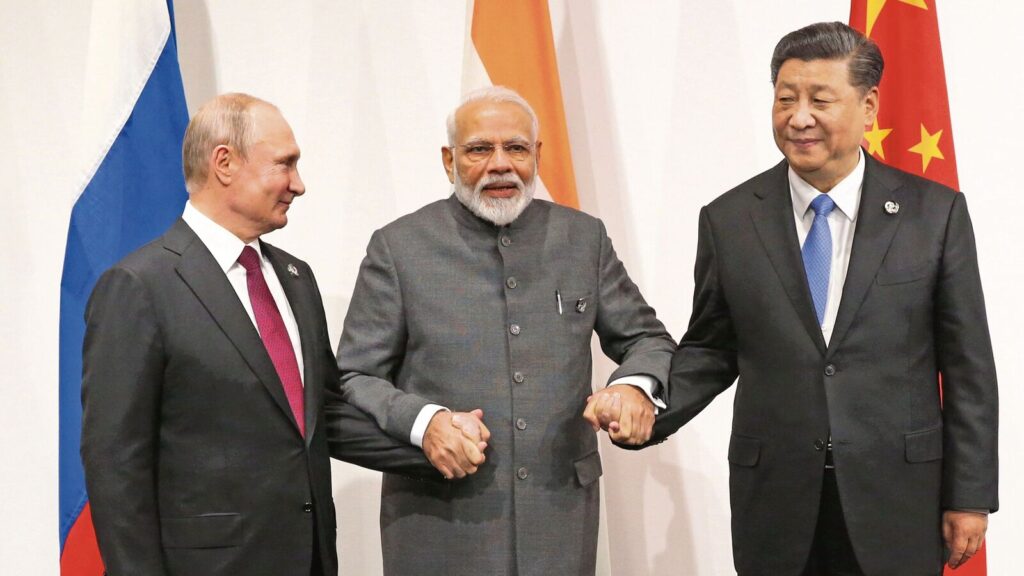
India China Russia powerhouse: The Convergence of Eurasian Giants
The Rise of the Eurasian Colossi: Individual Strengths and Global Ambitions
The 21st century has undeniably heralded the ascent of several Eurasian nations, with **India, China, and Russia** emerging as formidable **India China Russia powerhouse** entities on the global stage. Their distinct yet complementary strengths across economic, military, and demographic spheres coalesce to establish their positions as influential actors with significant global ambitions, collectively reshaping the international order.
India: A Demographic Dividend and Emerging Economic Might
India stands as the world’s most populous nation, endowed with a significant youth demographic that presents a unique demographic dividend. This vast and rapidly expanding young workforce is a pivotal asset, fueling not only economic growth but also human capital development, positioning India for sustained influence. Economically, India is recognized as the fifth-largest economy globally by nominal GDP and holds the position of the third-largest by purchasing power parity (PPP) [Source: Invest India]. The nation’s economic trajectory is impressive, consistently projected to be among the fastest-growing major economies worldwide. This growth is underpinned by ambitious targets for comprehensive infrastructure development, encompassing everything from digital highways to sprawling industrial corridors, alongside a profound digital transformation impacting every facet of society. India’s global ambitions are manifestly evident in its increasingly robust participation in various international forums, where it advocates for a multipolar world, and through its growing web of strategic partnerships across continents.
Militarily, India possesses the second-largest active military force globally [Source: Council on Foreign Relations]. This colossal force is complemented by a steadily modernizing defense sector, which is increasingly focused on indigenous production and technological self-reliance. Its substantial nuclear capabilities further solidify its role as a significant regional, and potentially global, security provider. India’s geopolitical influence is expanding through its proactive “Act East” policy, which seeks to deepen engagement with East and Southeast Asian nations, and its intricate balancing act between major global powers, playing a crucial role in maintaining stability and security in the dynamic Indo-Pacific region. This multifaceted approach underscores India’s essential contribution to the emerging **India China Russia powerhouse** dynamic.
China: Economic Juggernaut and Military Modernization
China holds the undeniable position of the world’s second-largest economy by nominal GDP and the largest by PPP [Source: IMF]. Its economic influence is unparalleled, driven by an exceptional manufacturing prowess, continuous technological advancements, and an extensive network of global trade. Flagship initiatives like the **Belt and Road Initiative (BRI)** vividly showcase China’s ambitions to fundamentally reshape global trade routes and economic partnerships, extending its economic and strategic reach across Asia, Africa, and Europe [Source: Council on Foreign Relations]. The BRI alone represents an unprecedented investment in global infrastructure, connecting markets and creating new spheres of influence.
China’s military modernization program is both rapid and extensive, involving significant investments across all branches of its armed forces. This includes a rapidly expanding navy capable of projecting power far beyond its territorial waters, a sophisticated air force, and advanced weaponry, such as hypersonic missiles, stealth technology, and cutting-edge cyber warfare capabilities. The People’s Liberation Army (PLA) remains the world’s largest active military force, and its technological advancements are aimed at establishing parity with, or even surpassing, leading global military powers. While China faces demographic challenges with a rapidly aging population and a shrinking workforce, its immense existing human resources, coupled with relentless technological innovation, continue to fuel its economic engine and ambitious global aspirations. China’s economic and military might cement its status as a core component of the **India China Russia powerhouse**.
Russia: Energy Powerhouse and Strategic Military Player
Russia, despite its relative economic size compared to China and India, exerts significant global influence primarily through its vast natural resources. As a crucial provider of oil and natural gas, Russia plays an indispensable role in global energy markets [Source: Council on Foreign Relations]. Its economy remains heavily reliant on these energy exports, which provide the leverage for its geopolitical maneuvers. The strategic importance of Russia’s energy reserves cannot be overstated, particularly in the context of European energy security and global commodity prices.
Militarily, Russia commands one of the world’s largest nuclear arsenals, a cornerstone of its national security doctrine, and a formidable conventional military. Its strategic capabilities, encompassing advanced air defense systems like the S-400, sophisticated electronic warfare, and highly capable cyber warfare units, significantly contribute to its geopolitical standing. Russia actively engages in international affairs, often challenging established norms and seeking to expand its influence in key regions such as Eastern Europe, the Middle East, and Africa. This assertiveness is frequently seen in its foreign policy, which prioritizes the defense of its perceived interests and the maintenance of a sphere of influence. However, Russia faces long-term demographic challenges, including a declining population and an aging workforce, which could impact its future economic vitality and military recruitment capabilities. Nevertheless, its strategic military prowess and energy dominance ensure Russia remains a critical element of the emerging **India China Russia powerhouse**, contributing uniquely to the complex dynamics of international relations. The individual strengths of these three nations, when viewed collectively, present a compelling picture of a world in transition, driven by this Eurasian convergence.
Forging a New World Order: Unpacking the Trilateral Relationship
The geopolitical and economic interplay between India, China, and Russia has long been a complex and evolving dynamic, significantly shaping the contours of a new multipolar world order. These three major powers, each with their own distinct historical trajectories and national interests, have increasingly found common ground through various multilateral platforms, notably BRICS (Brazil, Russia, India, China, and South Africa) and the Shanghai Cooperation Organization (SCO). These platforms serve as vital conduits for coordination and cooperation, underscoring the collective ambition to build an **India China Russia powerhouse** capable of influencing global governance.
Historically, the relationships among these nations have been multifaceted. India and Russia share a long-standing strategic partnership rooted deeply in defense cooperation and political ties that date back to the Cold War era. This enduring relationship remains robust, with Russia serving as a major and reliable supplier of military equipment and critical energy resources to India. For instance, India continues to be a significant importer of Russian oil, deftly navigating global sanctions and carefully maintaining its energy security [Source: WorldGossip.net]. This pragmatic approach highlights India’s commitment to its strategic interests, often independent of Western pressures.
China and Russia have, particularly in recent years, forged an increasingly close strategic alignment. This partnership is driven by a shared skepticism of Western dominance and a mutual desire to promote a more multipolar international system, where power is diffused rather than concentrated. Their economic ties are extensive, with China serving as a major consumer of Russian energy resources—including oil and gas—and a significant investor in Russian infrastructure projects, further integrating their economies. Militarily, they conduct regular joint exercises and cooperate on defense technology, signaling a deepening security partnership designed to counter perceived threats and enhance regional stability. This burgeoning partnership is a key pillar of the **India China Russia powerhouse**.
The relationship between India and China, however, is marked by a complex blend of both profound economic interdependence and persistent, often escalating, border disputes. While bilateral trade volumes between these two Asian giants are substantial and continue to grow, occasional tensions along their shared, undemarcated border frequently flare up, underscoring a delicate dynamic of cooperation intertwined with competition. Despite these inherent challenges, both countries actively participate in crucial forums like BRICS and the SCO, aiming to enhance economic cooperation, address regional security concerns, and foster greater stability across Eurasia. Their presence together in these bodies is indicative of their shared interest in shaping global narratives and structures.
Shared interests among the three nations largely revolve around establishing a more balanced and equitable global order, reducing the outsized influence of Western institutions, and vigorously promoting their respective national development agendas. The BRICS bloc, for example, serves as a pivotal platform for these nations to coordinate on global economic issues, advocate for significant reforms in international financial structures, and champion the interests of the Global South [Source: WorldGossip.net]. Similarly, the SCO, primarily focused on security and economic cooperation in Eurasia, provides a robust framework for addressing regional threats such as terrorism and separatism, and for fostering broader stability across the vast Eurasian landmass. This collaborative spirit, despite underlying tensions, solidifies their position as an emerging **India China Russia powerhouse**.
Economically, India, China, and Russia are all indispensable players in the global energy market. Russia, with its immense reserves, is a major energy exporter, while China and India are among the world’s largest and fastest-growing energy consumers. This creates a natural and powerful economic synergy, particularly in the crucial oil and gas sectors, exemplified by India’s continued, strategic imports of Russian oil amidst global shifts. Furthermore, there’s a growing push for de-dollarization in trade among these nations, as they increasingly seek to use national currencies for transactions to reduce their reliance on the US dollar and enhance financial sovereignty. This movement towards alternative financial systems further strengthens the economic autonomy and collective influence of the **India China Russia powerhouse**.
While the trilateral relationship is not without its complexities and bilateral tensions, particularly between India and China, their shared interests in economic development, regional security, and the emergence of a truly multipolar world order continue to drive their cooperation within multilateral frameworks. This intricate web of alliances and cooperation is instrumental in shaping the evolving global landscape, positioning them as an undeniable force in the 21st century.
Economic Currents: Trade, Energy, and Infrastructure Connectivities
The global economic landscape is in constant flux, shaped profoundly by increasingly interconnected trade relationships, evolving energy partnerships, and ambitious infrastructure projects. These “economic currents” are not merely isolated developments but rather interwoven threads that define the flow of goods, resources, and capital across continents, fostering both collaboration and competition on an international scale. The convergence of these trends, particularly among the leading Eurasian nations, underscores the emergence of an **India China Russia powerhouse** that is significantly influencing global economic trajectories.
Evolving Trade Relationships
Global trade continues to be a cornerstone of economic growth, with nations actively seeking to strengthen existing ties and forge new ones to ensure economic stability and expansion. While specific recent trends vary across different regions and sectors, the overarching movement points towards greater integration and diversification of trade partners. This involves navigating complex geopolitical dynamics, adapting to disruptive shifts in global supply chains, and responding to consumer demands for greater sustainability and ethical sourcing. The intricate web of international trade agreements, bilateral relationships, and regional economic blocs underscores a collective, albeit often competitive, effort to enhance economic resilience and capture new market opportunities. The **India China Russia powerhouse** exerts immense gravitational pull in this evolving trade matrix, with their combined economic might dictating terms and opening new avenues for commerce across Eurasia and beyond. Their increasing preference for local currency trade, for instance, is a testament to their efforts to reshape global financial flows.
Vital Energy Partnerships and Transitions
Energy forms the lifeblood of global economies, and partnerships in this critical sector are undergoing a significant transformation driven by climate concerns, technological advancements, and geopolitical imperatives. The emphasis is increasingly shifting towards sustainable and diverse energy sources to ensure both environmental responsibility and energy security. For instance, Saudi Arabia, a traditional oil giant, is strategically poised to become a major player in green hydrogen production, with plans for a colossal facility capable of producing 400,000 tons annually. This initiative highlights a broader global push towards cleaner energy solutions and a reduced reliance on traditional fossil fuels. Similarly, advancements in nuclear power are being vigorously explored, with projects such as HyperGrid in the U.S. aiming to power energy-intensive operations like AI data farms with a hybrid blend of nuclear, natural gas, solar, and advanced battery storage solutions, showcasing a multifaceted approach to energy security and sustainability [Source: Rude Baguette]. India, too, is actively pursuing its own comprehensive clean energy transition, recognizing the economic imperative of a greener future and the strategic benefits of energy independence. Russia, while still an oil and gas giant, is also exploring its role in this transition. These developments underscore the strategic importance of energy collaborations in shaping future economic powerhouses and highlight how the **India China Russia powerhouse** must adapt to and influence these global energy shifts.
Major Infrastructure Projects: Connecting the World
Infrastructure development acts as a crucial enabler of trade, fosters economic connectivity, and underpins geopolitical influence. Among the most prominent and transformative examples is China’s ambitious **Belt and Road Initiative (BRI)**, a vast global development strategy involving unprecedented infrastructure development and investments in nearly 150 countries and international organizations. The BRI aims to profoundly enhance regional integration, significantly increase trade flows, and stimulate economic growth through the construction of roads, railways, ports, power grids, digital networks, and other vital infrastructure. It serves as a tangible manifestation of China’s economic and strategic reach, solidifying its role as a key player in the **India China Russia powerhouse**.
Beyond the BRI, other significant projects are fundamentally reshaping regional and global connectivities. Saudi Arabia’s ambitious urban development projects, exemplified by the planned Mukaab skyscraper in Riyadh and the futuristic city of NEOM, reflect massive investments in creating avant-garde economic hubs designed to attract global talent and investment [Source: Rude Baguette]. Even in the private sector, companies like SpaceX are undertaking substantial infrastructure endeavors, such as a major water pipeline to its Starbase facility in Texas, highlighting the private sector’s increasingly vital role in driving large-scale projects that support economic expansion and innovation [Source: Rude Baguette]. These diverse infrastructure initiatives, whether state-led or private, collectively contribute to a more interconnected and economically dynamic global landscape. For the **India China Russia powerhouse**, these infrastructure projects are not just about physical links but about forging new economic corridors that solidify their collective influence and reorient global trade patterns towards Eurasia.
Geopolitical Chessboard: Navigating Global Challenges and Shifting Power Dynamics
The 21st century’s international landscape is an intricate geopolitical chessboard, increasingly shaped by the individual and collective influences of India, China, and Russia. These rising powers, often referred to as an **India China Russia powerhouse**, are actively redefining the global order, impacting the efficacy and direction of multilateral organizations, regional security frameworks, and prevailing approaches to global governance. Their actions and interactions are critical determinants of future international relations.
India’s Evolving Global Stance
India, as the world’s largest democracy and a rapidly growing economy, positions itself as a responsible global actor and a crucial voice for the Global South. It actively participates in a multitude of multilateral forums such as the BRICS (Brazil, Russia, India, China, South Africa) group and the Shanghai Cooperation Organization (SCO). India’s involvement in these organizations is multifaceted, aiming to foster deeper economic cooperation, enhance regional security, and consistently advocate for a more equitable and representative global order [Source: WorldGossip.net]. In terms of regional security, India navigates particularly complex relationships, especially in the strategically vital Indo-Pacific. Here, its growing naval capabilities and expanding strategic partnerships with like-minded nations seek to ensure stability, uphold freedom of navigation, and counter various maritime challenges. India’s approach to global governance emphasizes the principles of multilateralism, sustainable development, and a rules-based international system, while simultaneously pursuing its strategic autonomy, ensuring its foreign policy serves its national interests first [Source: WorldGossip.net]. This delicate balance reflects India’s unique position within the emerging **India China Russia powerhouse**.
China’s Assertive Influence
China’s extraordinary economic ascent over the past decades has undeniably fueled its ambition for a more central and dominant role in global affairs. It leverages its immense economic power through mega-initiatives like the Belt and Road Initiative (BRI), a massive infrastructure project spanning continents, designed to enhance its geopolitical influence, reshape global trade routes, and deepen economic dependencies [Source: WorldGossip.net]. China is a permanent member of the UN Security Council and a major player in the World Trade Organization (WTO), where it often advocates vigorously for its own economic interests and actively pushes for a global governance system that more accurately reflects its growing power and influence. Regional security concerns, particularly its assertive claims in the South China Sea and its persistent stance regarding Taiwan, highlight China’s increasingly firm and sometimes challenging approach to established international norms and territorial disputes [Source: WorldGossip.net]. China’s strategic posture is a defining characteristic of the **India China Russia powerhouse**, often setting the pace for geopolitical shifts.
Russia’s Resurgent Role
Russia, a key energy supplier to global markets and a permanent member of the UN Security Council, continues to assert its influence on the global stage, often in direct challenge to Western-led institutions and norms. Its foreign policy is characterized by a strong desire to restore its historical great power status and to secure its immediate neighborhood, perceiving any encroachment as a direct threat. Russia’s actions in European security, particularly its interventions in Ukraine, have significantly strained international relations and provoked widespread condemnation and sanctions [Source: WorldGossip.net]. In global energy governance, Russia strategically uses its vast oil and gas reserves as a powerful geopolitical tool, impacting global markets and influencing political dynamics, especially in Europe. It also plays a significant and active role in organizations like the SCO and BRICS, seeking to build alternative platforms for international cooperation and to project a united front against perceived Western hegemony. Russia’s persistent assertiveness contributes to the complex power dynamics of the **India China Russia powerhouse**.
Collective Impact and Shifting Power Dynamics
The collective weight of India, China, and Russia presents a significant and undeniable force challenging the traditional unipolar global order that emerged after the Cold War. Their cooperation, particularly within forums like BRICS and SCO, aims explicitly to promote a multipolar world where power is distributed among several major poles, reducing the dominance of any single nation or bloc [Source: WorldGossip.net]. This profound shifting power dynamic has far-reaching implications for global governance, as these nations frequently advocate for different norms, principles, and institutional reforms than those championed by Western powers. While they may not always align perfectly on all issues, given their diverse national interests and occasional bilateral tensions, their shared interest in a more diversified and balanced global power structure continues to reshape international affairs. This creates a more complex, interconnected, and dynamically evolving geopolitical chessboard, with the **India China Russia powerhouse** at its strategic heart, driving much of this transformation.
The Road Ahead: Future Trajectories and Potential Impacts
The formation of significant trilateral alignments, such as the evolving **India China Russia powerhouse**, invariably reshapes the global geopolitical landscape, creating new trajectories and potential impacts across the international system. Such an alliance, involving three nations with vast resources and ambitions, can fundamentally alter the balance of power, profoundly influence international relations, and spur emerging geopolitical developments in ways that will define the 21st century.
Redefining the Global Balance of Power
Historically, trilateral security pacts and strategic alliances have been instrumental in shifting the global balance of power, often leading to the formation of new power blocs or significantly strengthening existing ones. These alignments can introduce a more complex, multi-polar world order, where power is diffused among several influential centers, or conversely, consolidate power within established poles, leading to increased tensions. The enhanced collective military and economic capabilities of three aligned nations, particularly one as formidable as the **India China Russia powerhouse**, can challenge established hegemonies or create powerful counterbalances to rising powers. This can potentially lead to increased competition for resources and influence or, paradoxically, foster a more stable, albeit intricately balanced, global system through mutual deterrence. For instance, robust defense agreements can dramatically increase regional security for member states, providing a collective shield, while simultaneously being perceived as a direct threat by non-aligned nations, thereby accelerating an arms race or prompting other states to seek their own counter-alliances to maintain parity [Source: WorldGossip.net]. The sheer scale of combined military might and economic output within this trilateral framework signifies a profound shift from traditional power structures.
Implications for International Relations
The long-term implications for international relations stemming from an **India China Russia powerhouse** are multifaceted and far-reaching. A prominent trilateral alliance can foster significantly deeper diplomatic ties and increased cooperation among its members, leading to more synchronized foreign policies and harmonized economic strategies. This can result in strengthened trade agreements, joint technological development initiatives, and coordinated responses to pressing global challenges, such as climate change, international terrorism, or future pandemics. Such cooperation could present a united front in international forums, amplifying their collective voice and influence. However, these alliances can also exacerbate existing tensions with rival states or blocs, potentially leading to heightened suspicion, the emergence of proxy conflicts in contested regions, and even a breakdown of trust within multilateral institutions. The exclusion of certain nations from such powerful groupings can breed resentment and foster alternative alignments, further complicating the already intricate web of international diplomacy and potentially leading to a more fragmented global order [Source: WorldGossip.net]. The diplomatic dance around such an alliance will be critical in shaping its global reception and impact.
Emerging Geopolitical Developments
Looking ahead, the alignment of these three nations is likely to catalyze several significant emerging geopolitical developments. Regionally, the **India China Russia powerhouse** could lead to increased stability if the alliance acts as a deterrent against aggression and promotes cooperative security frameworks. Conversely, it could destabilize a region if it fuels existing rivalries or emboldens one member to act assertively. Economically, preferential trade agreements, coordinated financial policies, and shared infrastructure projects within the alliance could lead to significant shifts in global economic flows, impacting established supply chains, international markets, and global financial architecture. Technologically, these blocs may pool substantial resources for advanced research and development, particularly in cutting-edge areas like artificial intelligence, quantum computing, space exploration, and advanced defense technology, creating innovative advancements that could drive future economic growth and security [Source: Rude Baguette]. Such concerted efforts could also inadvertently lead to technological divides, creating distinct ecosystems that are less interoperable. Furthermore, the cultural and ideological influence of the aligned nations could expand, impacting international norms, values, and governance structures, potentially offering alternative models of development and societal organization. The rise of such a strong alliance demands careful and continuous observation, as its actions and reactions will undoubtedly shape the future trajectory of global power dynamics and the very nature of international cooperation in the decades to come.
Sources
- Council on Foreign Relations – China’s Aging Population
- Council on Foreign Relations – China’s Belt and Road Initiative
- Council on Foreign Relations – India-Pakistan Conflict
- GlobalFirePower.com – India Military Strength
- IMF – China: Data Mapper Profile
- IMF – India: Data Mapper Profile
- Invest India – Indian Economy Overview
- Rude Baguette – AI Data Farms to Run on Nuclear Power in US First: HyperGrid – A Dangerous Gamble or the Future of Tech?
- Rude Baguette – Golden Cube Rises from Desert Dust: Saudi Arabia Plans World’s Largest Building to Stun Visitors at 2030 World Expo
- Rude Baguette – SpaceX Declares They Walked Out on Their Own After Dragon Capsule Brings Home 6,700 Pounds of Next-Gen Robots from Daring Mission
- Rude Baguette – SpaceX’s Starbase Expansion Sees Water Flow With Strings Attached as New Pipeline Deal Imposes Tight Limits on Daily Supply and Operations
- WorldGossip.net – BRICS & the Global South: A Rising Alliance
- WorldGossip.net – Chinese Exploitation Threats in Microsoft SharePoint
- WorldGossip.net – India Inc: Cash Hoarding Causes, Impact
- WorldGossip.net – India’s Clean Energy Transition: The Economics of a Green Future
- WorldGossip.net – India, US, and Russian Oil: Navigating Energy Dynamics
- WorldGossip.net – MEA Mann: Modi Trip Strengthening Ties
- WorldGossip.net – Oil Price, Russia Sanctions, Global Shift
- WorldGossip.net – US-China Emissions: A Climate Dynamic