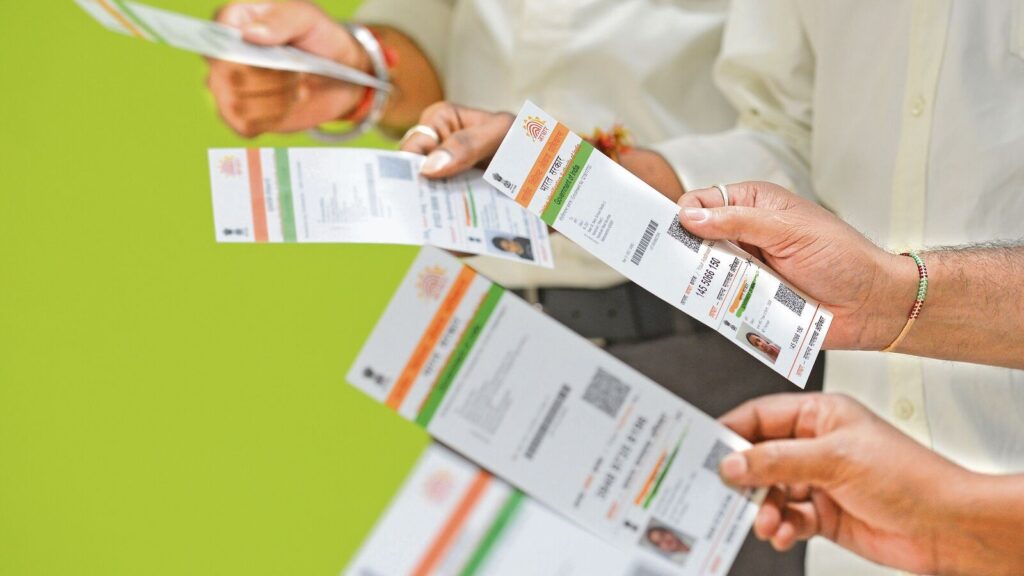
The Genesis of Identity – Understanding Aadhaar’s Foundation
The **Aadhaar India identity** program stands as a monumental undertaking in the landscape of digital governance, representing India’s ambitious vision to equip every resident with a unique identification number. Launched with the Hindi word for “foundation” as its namesake, Aadhaar was conceptualized to be the bedrock of an inclusive growth strategy. Its primary objective was to facilitate the direct and efficient delivery of government subsidies, benefits, and essential services, thereby combating corruption and minimizing leakage within the system UIDAI.
At its core, the Aadhaar system was designed to simplify the often-cumbersome processes of identification and verification. By offering a single, universally verifiable identity, it aimed to eliminate the necessity for individuals to present multiple documents, a common barrier for many. This streamlined approach empowers individuals, particularly those residing in marginalized or remote communities, to seamlessly access crucial services such as banking facilities, mobile connections, and provisions through the public distribution system UIDAI. The overarching goal was to ensure that identity, a fundamental right, was no longer an impediment to accessing welfare and opportunities.
Key Features and Underlying Principles
The foundational architecture of Aadhaar is built upon several core principles that define its functionality and impact:
* **Uniqueness:** This is perhaps the most defining characteristic of Aadhaar. Each Aadhaar number is meticulously generated to be unique to an individual, inextricably linked to their demographic and comprehensive biometric information. This includes, but is not limited to, fingerprints, iris scans, and facial photographs. This multi-modal biometric linkage is critical in ensuring that no duplicate identities can be created within the system, a significant step in addressing historical issues of phantom beneficiaries in welfare programs UIDAI.
* **Portability:** The Aadhaar number offers unparalleled portability, meaning it is verifiable across any location within India. This feature grants individuals the ability to prove their identity regardless of their geographic location, transcending state boundaries or administrative divisions. This is particularly beneficial for migrant workers and transient populations who frequently move for employment or other needs.
* **Ubiquity:** The system’s design emphasizes widespread accessibility and usability across a diverse array of government and, increasingly, private sector services. This fosters a seamless integration of identity verification into daily transactions, from opening bank accounts to applying for passports. This ubiquitous integration aims to reduce bureaucratic hurdles and enhance citizen convenience.
* **Privacy and Security:** Despite being a unique identifier, Aadhaar is explicitly not designed as a profiling tool. A core tenet of its design is that it does not collect sensitive information such as caste, religion, income levels, or health records. The data that is collected—primarily demographic and biometric—is subjected to stringent encryption and robust security measures. These protocols are continuously updated and monitored to protect resident information from unauthorized access or misuse UIDAI. The commitment to data security is paramount for the trust underpinning the **Aadhaar India identity**.
* **Inclusion:** A fundamental principle driving Aadhaar’s creation was to provide a verifiable identity to millions who previously lacked formal identification. This strategic move was intended to enable widespread financial and social inclusion, unlocking access to financial services, government welfare schemes, and opportunities that were previously out of reach. This aligns closely with broader national initiatives focused on bridging the digital divide and fostering economic empowerment, reflecting trends discussed in analyses like India’s Banking Margins: Q1 Trends and Outlook and understanding India Inc. Cash Hoarding: Causes & Impact.
* **Efficiency:** By significantly streamlining verification processes, Aadhaar substantially reduces the administrative burden and operational costs associated with the delivery of welfare programs and various public services. This enhanced efficiency is a critical aspect of good governance, allowing resources to be allocated more effectively and minimizing delays for beneficiaries. This drive for productivity gains can be likened to efforts seen in other sectors, such as the focus on Boosting HDFC Bank GenAI Productivity.
The foundational design of the **Aadhaar India identity** system underscores a resident-centric philosophy, aiming to establish a transparent, accountable, and highly efficient mechanism for identity verification. It stands as a profound testament to India’s strategic commitment to harnessing technology for the greater public good, driving large-scale governance reform, and ensuring that no citizen is left behind due to lack of identity.
Aadhaar in Action – How it Transforms Services and Governance
The integration of the **Aadhaar India identity** into various public and private sector services has brought about a profound transformation in how governance is conducted and how citizens access essential provisions. Designed as a foundational digital identity, Aadhaar has moved beyond mere identification to become a critical enabler of direct benefit transfers, financial inclusion, and improved public service delivery.
Revolutionizing Direct Benefit Transfers (DBT)
One of the most significant impacts of Aadhaar has been its role in revolutionizing Direct Benefit Transfers. Prior to Aadhaar, welfare schemes often suffered from leakages, delays, and ghost beneficiaries, where funds were siphoned off by intermediaries or reached ineligible individuals. By linking Aadhaar numbers to bank accounts and government welfare programs, funds can now be transferred directly from the government to the beneficiary’s bank account. This eliminates multiple layers of intermediaries, reduces corruption, and ensures that the intended recipient receives the full amount of their benefit. Schemes ranging from LPG subsidies (PAHAL) to pensions and scholarships have seen marked improvements in efficiency and transparency thanks to this system. The shift to DBT has made the delivery of social welfare more accountable and has empowered beneficiaries by giving them direct control over their entitlements, significantly strengthening the integrity of the **Aadhaar India identity** system in welfare provision UIDAI.
Fostering Financial Inclusion
Aadhaar has played a pivotal role in India’s financial inclusion drive, particularly through initiatives like the Pradhan Mantri Jan Dhan Yojana (PMJDY), which aimed to provide banking services to every household. For millions of unbanked individuals, especially in rural and remote areas, the lack of traditional identity documents was a major barrier to opening bank accounts. Aadhaar provided a universally acceptable, simple, and verifiable identity that allowed these individuals to open “no-frills” bank accounts with ease. This has brought a vast section of the population into the formal financial system, enabling them to save, receive government benefits, and access credit. Furthermore, Aadhaar-enabled Payment Systems (AEPS) allow individuals to conduct financial transactions using their Aadhaar number and biometrics at micro-ATMs and business correspondent points, bringing banking services to their doorstep even in areas without traditional bank branches WorldGossip.net – India’s Banking Margins: Q1 Trends and Outlook. This widespread access to banking services is a cornerstone of the **Aadhaar India identity**’s contribution to economic empowerment.
Enhancing Public Service Delivery
Beyond financial transfers, Aadhaar has been integrated across a wide spectrum of government services, streamlining processes and enhancing accessibility:
* **Public Distribution System (PDS):** By linking ration cards to Aadhaar, the PDS aims to prevent pilferage and ensure that subsidized food grains reach legitimate beneficiaries. Biometric authentication at fair price shops helps verify the identity of the recipient, reducing instances of ghost beneficiaries and diversion of grains.
* **Mobile Connections:** Obtaining a new SIM card now typically requires Aadhaar-based e-KYC (Know Your Customer), which instantly verifies the subscriber’s identity using biometrics. This significantly reduces the time taken for activation and enhances security by preventing fraudulent connections.
* **Passport Applications:** Aadhaar has expedited the passport application process by simplifying identity verification, reducing the need for multiple documents and speeding up background checks.
* **Pension and Provident Fund Disbursements:** Authentication through Aadhaar ensures that pension and provident fund benefits are disbursed accurately to eligible retirees, minimizing delays and errors.
* **Digital Locker (DigiLocker):** Aadhaar acts as the primary identity for accessing DigiLocker, a platform for storing digital copies of documents. This secure cloud-based platform allows citizens to securely access and share their official documents anytime, anywhere, reducing the need for physical paperwork and facilitating paperless governance.
The transformative power of Aadhaar lies in its ability to provide a common digital layer for identity verification, enabling interoperability across diverse government departments and services. This not only makes services more accessible and efficient for citizens but also provides governments with a powerful tool to monitor service delivery, reduce fraud, and ensure better utilization of public funds. The continuous expansion of services leveraging the **Aadhaar India identity** demonstrates its growing importance in modernizing Indian governance.
The Pillars of Trust – Technology and Security in Aadhaar
The **Aadhaar India identity** system, globally recognized as the largest biometric identification program, is underpinned by an exceptionally robust technological framework. This infrastructure is meticulously designed to manage an colossal scale of data while simultaneously upholding stringent security protocols and ensuring reliable authentication for over a billion residents. At its operational core, Aadhaar necessitates the collection of both biometric and demographic information from individuals across India.
Data Collection: Biometric and Demographic Pillars
The enrollment process for Aadhaar is comprehensive, requiring individuals to furnish a combination of demographic and biometric data. Demographic information typically includes foundational details such as name, date of birth, gender, address, and, for minors, parent or guardian details. This demographic data establishes the unique identity record for each person.
Crucially, Aadhaar also incorporates biometric data collection to guarantee uniqueness and proactively prevent duplicate enrollments. This multi-modal biometric capture includes:
* **Ten fingerprints:** The scans of all ten fingers are taken to capture their unique ridge patterns, which are highly individualistic.
* **Iris scans:** Both irises are scanned, as iris patterns are remarkably distinctive and remain stable throughout an individual’s lifetime, offering a reliable biometric identifier.
* **Facial image:** A high-quality photograph of the individual’s face is also captured, serving as another visual identification reference.
This sophisticated multi-modal biometric approach significantly elevates the system’s capacity to uniquely identify each resident. It drastically minimizes the probability of duplicate or fraudulent enrollments, thereby safeguarding the integrity of the **Aadhaar India identity** database.
Technology Architecture: The Backbone of Aadhaar
The Unique Identification Authority of India (UIDAI), the statutory body responsible for the Aadhaar ecosystem, operates a highly centralized database integrated with a widely distributed enrollment and authentication network. The underlying technology architecture is engineered to process and manage an enormous volume of transactions and data securely and efficiently. It relies on a scalable, high-availability, and fault-tolerant infrastructure, employing cutting-edge database management systems, advanced network infrastructure, and robust cloud computing principles to maintain its vast repository of information. While specific technical details are proprietary for security reasons, the system’s design incorporates redundancy, disaster recovery mechanisms, and real-time monitoring to ensure continuous operation and data integrity. This formidable technical foundation is essential for supporting the widespread use of the **Aadhaar India identity**.
Security Measures and Data Protection
Given the extremely sensitive nature of the personal data collected, the UIDAI has implemented a rigorous, multi-layered security framework designed to protect Aadhaar data and uphold resident privacy. Key security measures include:
* **Data Encryption:** All data, whether it is stored (at rest) or being transmitted across networks (in transit), is subject to powerful encryption protocols. This encryption spans from the point of data collection at enrollment centers to its secure storage within the Central Identities Data Repository (CIDR), preventing unauthorized access and tampering.
* **Secure Storage:** The CIDR, the central repository where all Aadhaar data is housed, is fortified with exceptionally high levels of physical and cyber security. This includes restricted access protocols, continuous surveillance, and advanced intrusion detection systems.
* **Access Controls:** Strict access control mechanisms are rigorously enforced. This ensures that only authorized personnel with specific, clearly defined permissions can access data, and solely for legitimate and auditable purposes. All access attempts are logged and monitored.
* **Regular Audits and Security Reviews:** The UIDAI maintains a proactive stance on security, conducting frequent independent security audits, penetration testing, and vulnerability assessments. These regular reviews are crucial for identifying and promptly addressing any potential weaknesses or emerging threats within the system.
* **Legal Framework:** The Aadhaar (Targeted Delivery of Financial and Other Subsidies, Benefits and Services) Act, 2016, provides a robust legal framework specifically for the protection of Aadhaar data. This legislation criminalizes unauthorized access, use, or disclosure of resident information, providing legal recourse against data breaches.
It is a critical point that the UIDAI consistently asserts that only the minimal demographic and biometric data required strictly for identification and authentication purposes is collected and stored. Other highly personal information, such as an individual’s religion, caste, income, or health records, is explicitly neither collected nor stored within the Aadhaar database, reinforcing the system’s focus solely on identity verification.
Authentication: Verifying Identity
The core functionality of Aadhaar’s advanced technology and security framework is to facilitate robust, reliable, and instantaneous authentication. This allows individuals to effortlessly prove their identity for a multitude of services and benefits. Aadhaar authentication primarily involves matching an individual’s current biometric data (such as fingerprints or iris scans) with the corresponding data securely stored in the CIDR. The most common authentication methods include:
* **Biometric Authentication:** This is the most prevalent and secure method. A resident provides their fingerprint or iris scan, which is then encrypted and sent to the CIDR for a match against the stored biometrics. A successful match confirms identity.
* **OTP (One-Time Password) Authentication:** For online services or transactions where biometric capture might not be feasible, an OTP can be securely sent to the resident’s registered mobile number or email address. This OTP acts as a secondary factor for verification.
* **Demographic Authentication:** In specific, permissible scenarios, demographic details provided by the resident can be matched with the stored information in the CIDR as a form of identity verification.
These sophisticated authentication mechanisms provide a secure, efficient, and versatile way for individuals to confirm their identity across various platforms, significantly streamlining access to services and effectively mitigating fraud. The ongoing evolution and vigilance in maintaining this technological and security infrastructure are absolutely critical to preserving public trust and ensuring the continued efficacy and integrity of the **Aadhaar India identity** system.
Navigating the Complexities – Challenges and Criticisms of Aadhaar
While the **Aadhaar India identity** program was conceived with the noble objective of streamlining public services and fostering inclusion, its implementation has not been without significant challenges and fervent criticisms. These concerns predominantly revolve around sensitive issues of privacy, the robustness of data security, and pervasive issues related to implementation errors leading to exclusion.
Privacy Concerns and the Right to Privacy
A foundational and persistent criticism leveled against Aadhaar centers squarely on privacy. The unparalleled collection and centralization of biometric and demographic data for over a billion people inherently raise substantial concerns about the potential for mass surveillance, data profiling, and misuse of sensitive information. Critics have vociferously argued that such an immense, centralized database could become an irresistible target for malicious actors, making it vulnerable to breaches that could lead to widespread identity theft, financial fraud, and other severe privacy violations. For a considerable period, the absence of a dedicated and robust data protection law in India exacerbated these fears, leaving individuals’ data potentially exposed to exploitation by both state and non-state entities WorldGossip.net. The landmark Supreme Court judgment in 2017, which declared privacy a fundamental right under the Indian Constitution, significantly influenced the discourse around Aadhaar, emphasizing the need for robust legal frameworks to safeguard individual data.
Data Security Issues and Breaches
Despite official assurances from the UIDAI regarding the impenetrable security of the CIDR, numerous instances of data breaches and leaks within the broader Aadhaar ecosystem have been widely reported. These incidents, whether stemming from vulnerabilities in government portals, the platforms of third-party agencies utilizing Aadhaar data for authentication, or state-level databases, have highlighted critical weaknesses in the overall security infrastructure. Such breaches have the potential to expose highly sensitive personal information, including names, addresses, and even Aadhaar numbers themselves, leading to devastating repercussions for individuals, including financial fraud, social stigma, and unauthorized access to services WorldGossip.net. While the UIDAI maintains that the CIDR itself has never been breached, the vulnerability of the peripheral systems that integrate with Aadhaar remains a significant concern, continually challenging the perception of security around the **Aadhaar India identity**.
Inclusion and Exclusion Errors
A major practical challenge that has plagued Aadhaar’s implementation is the prevalence of inclusion and exclusion errors. While the program’s explicit goal was to ensure that welfare benefits reached every rightful beneficiary, a significant number of genuine individuals, particularly among the poor, elderly, disabled, and marginalized communities, have found themselves excluded from essential services. This exclusion can be attributed to a myriad of issues, including:
* **Biometric Authentication Failures:** Elderly individuals, manual laborers, or those with unique skin conditions often face issues with fingerprint or iris recognition, leading to repeated authentication failures and denial of services like pensions or ration.
* **Errors in Aadhaar Data:** Discrepancies, typos, or incorrect demographic details entered during enrollment can lead to authentication mismatches, causing genuine beneficiaries to be flagged as ineligible.
* **Lack of Access to Enrollment/Update Facilities:** Remote populations or those with mobility issues struggle to access enrollment centers or update their Aadhaar details, further exacerbating exclusion.
Conversely, there have also been reports of duplicate or fraudulent Aadhaar numbers being generated or misused, raising serious questions about the system’s integrity and its ability to completely eliminate malpractices WorldGossip.net. The tension between achieving universal inclusion and preventing fraud remains a persistent hurdle for the **Aadhaar India identity**.
Significant Legal Challenges and Judicial Scrutiny
The journey of Aadhaar has been punctuated by numerous, high-stakes legal battles that have profoundly shaped its implementation. The Supreme Court of India has been instrumental in deliberating on several petitions challenging the scheme’s constitutional validity, with privacy emerging as the central ground for contention. Key judicial rulings have had far-reaching implications:
* **Puttaswamy Judgment (2017):** This landmark judgment declared privacy a fundamental right, unequivocally establishing a legal bedrock for privacy protection in India and setting the stage for greater scrutiny of data collection initiatives like Aadhaar.
* **Aadhaar Act Challenge (2018):** The Supreme Court upheld the constitutional validity of the Aadhaar Act but significantly restricted its mandatory usage. It ruled that Aadhaar could only be made mandatory for income tax filings and for availing benefits and subsidies from consolidated funds of India. Its mandatory linking with bank accounts, mobile connections, and other private services was struck down.
These legal interventions underscore the complex and delicate balance that must be struck between the state’s legitimate objectives of efficient governance and an individual’s fundamental rights. The ongoing legal landscape continues to influence the scope and application of the **Aadhaar India identity**, highlighting the dynamic interplay between technology, law, and citizen rights in a digital age.
The Road Ahead – Aadhaar’s Evolution and Future Impact
The **Aadhaar India identity** program, already the world’s most extensive biometric identity system, is poised for significant evolution, with an aim to further streamline service delivery, deepen digital inclusion, and navigate persistent privacy concerns. Its future trajectory envisions expanding its application beyond fundamental identification to potentially serve as a foundational layer for a broader spectrum of digital public infrastructures. This ambitious expansion includes critical advancements in sectors such as financial technology (FinTech), healthcare, education, and even smart city initiatives, all designed to facilitate seamless, secure, and authenticated access to services for India’s vast population.
Expanding Applications and Digital Public Infrastructure
Looking ahead, Aadhaar is expected to integrate even more deeply into various facets of public and private life, evolving into a key enabler for India’s digital transformation. In healthcare, initiatives like the Ayushman Bharat Digital Mission (ABDM) leverage the **Aadhaar India identity** to create unique health IDs, enabling paperless medical records and seamless access to healthcare services across the country. In education, it could simplify scholarship disbursements and academic credential verification. The program’s APIs (Application Programming Interfaces) are designed to be openly accessible, encouraging innovation and the development of new applications by both government and private entities, fostering a vibrant ecosystem of digital services built upon a trusted identity layer. This expansion, however, mandates a meticulous approach to maintain the integrity and security of citizen data.
Balancing Innovation with Enhanced Privacy and Data Governance
The expansion of Aadhaar’s utility necessarily brings with it an increased imperative to balance innovation with robust privacy safeguards. The program has faced considerable scrutiny regarding its data security mechanisms and the potential for misuse of personal information, prompting ongoing public discourse and legal challenges. The emphasis in the coming years will undoubtedly be on implementing even more stringent security measures, enhancing transparency in data handling practices, and crucially, providing individuals with greater control over their personal data. The impending comprehensive data protection legislation in India is expected to play a pivotal role in this regard, establishing clear legal frameworks for data collection, processing, and consent. This aligns with broader global trends towards more citizen-centric digital identity systems that prioritize “privacy by design,” ensuring that privacy considerations are built into the system from its inception rather than being an afterthought. The continuous refinement of the **Aadhaar India identity** system’s privacy architecture will be vital for its long-term success and public acceptance.
Aadhaar as a Global Model and Lessons Learned
Looking beyond India’s borders, Aadhaar stands as a powerful and compelling model for other nations seeking to establish comprehensive, scalable digital identity systems. Its unparalleled success in providing unique identities to over a billion people in a relatively short span, and its demonstrable impact in facilitating direct benefit transfers, has drawn considerable international attention and academic interest. Key lessons gleaned from Aadhaar’s extensive implementation, particularly concerning its ability to achieve massive scale, ensure interoperability across diverse platforms, and navigate the inherent challenges of balancing universal access with fundamental individual rights, offer invaluable insights for developing countries grappling with similar identity challenges.
The ongoing evolution of Aadhaar, particularly in its proactive efforts to address privacy concerns, continuously refine its technological infrastructure, and adapt to changing legal and social landscapes, will be closely observed by policymakers and technologists worldwide. Its trajectory could very well shape the future discourse and implementation strategies for digital identity solutions on a global scale, cementing the **Aadhaar India identity** as a significant case study in national digital transformation.