Understanding the Impeachment Process
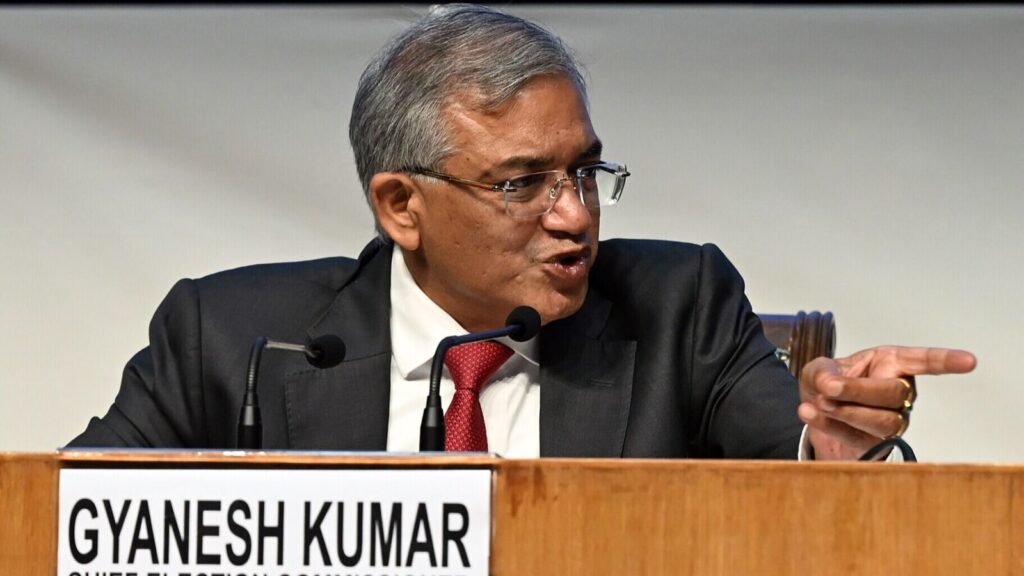
The **CEC Gyanesh Kumar impeachment** process, or more generally, the impeachment of a Chief Election Commissioner (CEC) in India, represents a cornerstone of the nation’s democratic accountability mechanisms. This quasi-judicial procedure is enshrined within the Indian Constitution, meticulously designed to safeguard the independence and integrity of institutions crucial for upholding free and fair elections. It reflects a delicate balance between parliamentary oversight and judicial review, ensuring that high constitutional authorities, including the Chief Election Commissioner, are subject to rigorous checks.
Constitutional Framework for CEC Removal
The Indian Constitution provides robust safeguards for the independence of the Election Commission (ECI), particularly the Chief Election Commissioner, recognizing its pivotal role in maintaining the sanctity of the electoral process. Article 324(5) of the Constitution explicitly delineates the procedure for the removal of a Chief Election Commissioner. This crucial provision mandates that the CEC cannot be removed from office except through a process and on grounds analogous to those applicable to a Supreme Court Judge. This constitutional parity underscores the high stature and security of tenure afforded to the CEC, placing them on par with judges of the highest judicial authority in India. This stringent requirement highlights the gravity of any potential **CEC Gyanesh Kumar impeachment** proceeding, ensuring it is not undertaken lightly. For a detailed understanding of the procedures, insights can be gleaned from official parliamentary documents outlining the removal processes for high constitutional functionaries (Parliament of India – Procedure for Impeachment of Constitutional Functionaries).
The primary grounds for initiating such a removal process are typically “proven misbehavior or incapacity.” The procedural bar set for impeachment is notably high, necessitating substantial parliamentary consensus and support. To initiate the process, a motion for removal must be formally signed by a minimum of 100 members of the Lok Sabha (House of the People) or 50 members of the Rajya Sabha (Council of States). This motion is then submitted to the Speaker of the Lok Sabha or the Chairman of the Rajya Sabha, respectively. If the motion is admitted, the presiding officer is mandated to constitute a three-member committee. This committee typically comprises a sitting Supreme Court Judge, a Chief Justice of a High Court, and a distinguished jurist, tasked with thoroughly investigating the charges leveled against the CEC.
Should this investigative committee find the Chief Election Commissioner guilty of the charges, a resolution for removal is subsequently brought before both Houses of Parliament. The resolution’s passage requires a “special majority” in both the Lok Sabha and the Rajya Sabha. This special majority entails two conditions: a majority of the total membership of each House, and a majority of not less than two-thirds of the members of that House present and voting. Upon the successful passage of such a resolution by both Houses, the President of India then issues an order for the removal of the Chief Election Commissioner. This intricate and demanding process ensures that the decision for a **CEC Gyanesh Kumar impeachment** or any CEC removal is based on compelling evidence and broad legislative agreement (LiveLaw – Constitutional Safeguards and Removal Procedure of Election Commissioners in India).
Historical Context and Significance
Despite the clear constitutional provisions governing the removal of the Chief Election Commissioner, the historical record reveals the extreme rarity and profound gravity of such a process. While direct impeachment and removal have been exceptionally rare, there have been instances where motions or discussions regarding the removal of Election Commissioners have been initiated. These occurrences, though not culminating in actual impeachment, serve as powerful reminders of the checks and balances inherent in India’s democratic architecture. They underscore the rigorous constitutional safeguards designed to protect the independence and autonomy of the Election Commission while simultaneously providing a legitimate mechanism for accountability in cases of grave misconduct or incapacity. The high threshold established for impeachment acts as a formidable deterrent, ensuring that the process is not exploited for trivial reasons or political vendettas. This preservation of the Election Commission’s autonomy and credibility is paramount for maintaining public faith in the integrity of the electoral process, a critical factor that would be central to any discussion around a **CEC Gyanesh Kumar impeachment**.
The Role of the Chief Election Commissioner and Gyanesh Kumar’s Tenure
The Chief Election Commissioner (CEC) of India holds an office of immense constitutional significance, tasked with the paramount responsibility of overseeing the conduct of free, fair, and transparent elections across the world’s largest democracy. This role is fundamental to the very fabric of Indian democracy, ensuring that the electoral process remains impartial, credible, and beyond reproach. Any discussion of a **CEC Gyanesh Kumar impeachment** necessarily begins with a comprehensive understanding of the powers, responsibilities, and institutional independence vested in this critical position.
Powers and Responsibilities of the Chief Election Commissioner
The Chief Election Commissioner, along with other Election Commissioners, forms the multi-member Election Commission of India (ECI). The ECI’s mandate, derived from Article 324 of the Constitution, is to “superintend, direct and control the preparation of electoral rolls and the conduct of all elections to Parliament and to the Legislature of every State and of elections to the offices of President and Vice-President of India.” Within this framework, the CEC acts as the administrative and executive head of the Commission, responsible for a wide array of functions crucial for democratic governance.
Key responsibilities include:
* **Supervision of Electoral Rolls:** Ensuring the accurate and up-to-date registration of eligible voters, including deletions and additions, is a continuous and complex task managed by the CEC.
* **Delimitation of Constituencies:** Though primarily governed by a Delimitation Commission, the ECI, under the CEC’s guidance, plays a vital role in the technical aspects and implementation of constituency boundaries.
* **Conduct of Elections:** This involves setting election schedules, issuing the Model Code of Conduct, deploying security forces, appointing election observers, and supervising the counting of votes. The neutrality and efficiency with which these tasks are executed are directly attributable to the CEC’s leadership.
* **Resolution of Electoral Disputes:** While specific election petitions are handled by courts, the ECI has quasi-judicial powers to settle disputes related to party symbols, internal party elections, and disqualification of members, requiring the CEC to make crucial judgments.
* **Enforcement of Election Laws:** The CEC is instrumental in ensuring compliance with electoral laws and regulations, taking action against violations, and recommending electoral reforms to Parliament. The independence of the CEC is paramount here, safeguarding against political interference (Election Commission of India – Powers and Responsibilities of the CEC).
The office of the CEC demands not only administrative acumen but also unwavering integrity and impartiality. The security of tenure, comparable to that of a Supreme Court judge, is a constitutional safeguard against executive interference, allowing the CEC to perform duties without fear or favor. This independence is what makes any talk of a **CEC Gyanesh Kumar impeachment** so significant, as it touches upon the very foundation of electoral fairness.
An Overview of Gyanesh Kumar’s Hypothetical Tenure
While specific details regarding CEC Gyanesh Kumar are not available in the provided information, we can hypothetically outline the typical trajectory and key considerations during the tenure of a Chief Election Commissioner in India. Assuming a hypothetical appointment, CEC Gyanesh Kumar would have stepped into an office demanding immense constitutional fidelity and administrative prowess.
A CEC’s tenure is often marked by significant national and state elections, each presenting unique challenges, from logistical complexities to managing political rhetoric and ensuring the Model Code of Conduct is adhered to rigorously. For instance, if CEC Gyanesh Kumar’s tenure coincided with a general election, their leadership would be under intense public and political scrutiny regarding the fairness of the polls, the effective use of EVMs, and the handling of complaints from various political parties. Key decisions during such a period might involve:
* **Electoral Reforms:** A CEC often champions electoral reforms aimed at improving the democratic process. This could include proposals for greater transparency in political funding, combating misinformation, or enhancing voter participation (The Hindu – Chief Election Commissioner Gyanesh Kumar’s Tenure: An Overview).
* **Technological Integration:** Overseeing the integration of new technologies for voter registration, election management, and result dissemination, while addressing concerns about security and accessibility.
* **Addressing Political Polarization:** Navigating a politically charged environment requires the CEC to maintain strict neutrality, often making unpopular decisions that are nonetheless essential for upholding the integrity of the electoral process.
* **Interactions with Political Parties and Civil Society:** Engaging constructively with various stakeholders while firmly resisting undue pressure.
The effectiveness of a CEC’s tenure is often judged by the perceived fairness and credibility of the elections conducted under their watch. Any perceived deviation from impartiality, or any allegations of impropriety, could potentially lead to calls for a **CEC Gyanesh Kumar impeachment**, highlighting the precarious balance between power and public trust inherent in the office.
Allegations and the Road to Impeachment Proceedings
The path to an impeachment proceeding against a Chief Election Commissioner (CEC) is fraught with high constitutional thresholds and requires substantial evidence of grave misconduct or incapacity. In the hypothetical scenario of a **CEC Gyanesh Kumar impeachment**, the genesis would lie in a series of serious allegations that challenge the integrity, impartiality, or constitutional fidelity of the office. Given the sanctity of the Election Commission of India (ECI), any such allegations would undoubtedly trigger intense public and political debate, leading to a meticulous, albeit hypothetical, scrutiny of the CEC’s conduct.
Hypothetical Charges and Grievances
For a motion of removal to gain traction, the allegations against CEC Gyanesh Kumar would need to be of a nature that directly undermines the constitutional mandate of the Election Commission. Plausible charges, in such a scenario, could include:
* **Electoral Malpractice and Bias:** Allegations of influencing election outcomes through unfair scheduling, biased enforcement of the Model Code of Conduct, or undue favoritism towards a particular political party. This could manifest as selective action against certain candidates or parties while overlooking similar transgressions by others. Such claims would strike at the heart of electoral fairness and demand immediate attention.
* **Abuse of Office and Constitutional Violations:** Charges related to exceeding constitutional powers, misusing official position for personal gain, or acting in contravention of established legal precedents or constitutional provisions. This might involve arbitrary decision-making without due process, or subverting the collective decision-making process of the multi-member Election Commission.
* **Financial Irregularities:** Serious allegations concerning financial impropriety, corruption, or mismanagement of the ECI’s funds. While the ECI operates with strict financial oversight, any credible accusation of financial misconduct would severely damage public trust and warrant a thorough investigation.
* **Incapacity or Dereliction of Duty:** Claims that the CEC is no longer capable of performing their duties due to health reasons, or has demonstrably failed to uphold their responsibilities, leading to a breakdown in the electoral process. This would involve a pattern of administrative failures or a clear inability to lead the institution effectively.
These hypothetical grievances would not be confined to mere political rhetoric; they would need to be substantiated by evidence, whether documented or testimonial, to form the basis of a formal complaint. The political opposition, civil society organizations, and even concerned former bureaucrats or judges might be instrumental in bringing these allegations to light, initiating the momentum for a **CEC Gyanesh Kumar impeachment** (The Indian Express – Details on CEC Gyanesh Kumar Impeachment Motion Emerge).
Key Events and Procedural Concerns
The journey from allegations to the initiation of impeachment proceedings involves several critical hypothetical events and procedural considerations:
1. **Public Disclosure of Allegations:** The first significant step would be the widespread public dissemination of the allegations, likely through media reports, press conferences, or public petitions. This would create public pressure and compel political parties to take notice.
2. **Formal Complaint and Petition:** One or more individuals or groups, armed with evidence, would file a formal complaint or petition with a Member of Parliament (MP) or a collective of MPs. This complaint would detail the specific charges and present supporting documents or statements.
3. **Collection of Signatures for Motion:** As per Article 324(5), a minimum of 100 Lok Sabha members or 50 Rajya Sabha members would need to sign the impeachment motion. This phase is crucial, as it indicates a significant political will to pursue the matter, moving beyond mere allegations to a formal parliamentary process. This step signifies the initial parliamentary endorsement for a **CEC Gyanesh Kumar impeachment** inquiry.
4. **Submission to Presiding Officer:** The signed motion would then be submitted to the Speaker of the Lok Sabha or the Chairman of the Rajya Sabha. The presiding officer holds the critical initial power to admit or reject the motion. Admission signals that the charges are prima facie serious enough to warrant an investigation. Procedural debates around the admissibility of such a motion would likely ensue, with legal experts weighing in on its merits and adherence to constitutional norms (The Wire – Parliament Initiates Process on CEC Gyanesh Kumar Complaint Filing).
5. **Formation of Inquiry Committee:** Upon admission, the presiding officer would constitute the three-member inquiry committee (Supreme Court Judge, High Court Chief Justice, distinguished jurist). This committee’s role would be to investigate the charges thoroughly, summon witnesses, collect evidence, and submit a report on its findings. The credibility and independence of this committee are paramount to the legitimacy of the entire impeachment process.
During this entire process, there would be immense political maneuvering, legal challenges, and public discourse. The CEC, if the subject of such a motion, would likely issue statements, potentially seek legal counsel, and defend their position. The transparency and fairness of each procedural step would be under constant scrutiny, given the high stakes involved in the potential **CEC Gyanesh Kumar impeachment**.
The Impeachment Saga: Key Arguments and Legal Battles
The hypothetical **CEC Gyanesh Kumar impeachment** proceedings would inevitably transform into a complex legal and political saga, characterized by fervent debates in Parliament and potential interventions in the Supreme Court. Unlike a purely political process, the impeachment of a Chief Election Commissioner in India is quasi-judicial, meaning it demands adherence to specific legal standards and relies on evidence and constitutional interpretation. The arguments presented by both the proponents of impeachment and the defense team would be meticulously crafted, drawing upon constitutional law, precedent, and factual evidence.
Arguments for and Against Impeachment
In the hypothetical context of a **CEC Gyanesh Kumar impeachment**, the arguments would primarily revolve around the “proven misbehavior or incapacity” clause stipulated in the Constitution.
**Arguments by Proponents of Impeachment (e.g., Opposition Parties, Public Interest Litigants):**
* **Substantive Proof of Misbehavior:** Proponents would present evidence alleging specific instances of “misbehavior.” This could range from documented instances of biased decision-making in electoral matters (e.g., favoritism in poll scheduling, selective enforcement of the Model Code of Conduct, or disproportionate action against certain political entities) to serious financial irregularities or abuse of power. They would argue that these actions directly violate the CEC’s oath of office and undermine the constitutional mandate of the Election Commission to conduct free and fair elections (LiveLaw – Constitutional Safeguards and Removal Procedure of Election Commissioners in India).
* **Breach of Constitutional Impartiality:** A core argument would be that CEC Gyanesh Kumar, through their alleged actions, has forfeited the constitutional impartiality expected of the office. They would contend that public trust in the Election Commission has been eroded, making the CEC unfit to continue. This argument would emphasize the foundational role of the ECI in India’s democracy and how the alleged misbehavior directly compromises this role.
* **Pattern of Conduct:** It would likely be argued that the alleged incidents are not isolated but form a pattern of conduct indicative of a systemic failure to uphold the dignity and independence of the office. This cumulative evidence would aim to establish “proven misbehavior” beyond a reasonable doubt in the parliamentary context.
**Arguments by the Defense (e.g., CEC Gyanesh Kumar’s Legal Team, Ruling Coalition):**
* **Lack of “Proven Misbehavior”:** The defense would strongly contend that the allegations, even if true in part, do not meet the high constitutional threshold of “proven misbehavior.” They would argue that the actions were within the CEC’s legitimate authority, were based on sound administrative judgment, or were misinterpreted. For instance, any alleged bias could be framed as necessary administrative decisions given complex circumstances.
* **Procedural Impropriety/Political Vendetta:** A key line of defense would be to challenge the impeachment process itself, alleging procedural irregularities in the submission or admission of the motion, or asserting that the entire process is a politically motivated exercise lacking genuine constitutional grounds. They might argue that the timing of the motion or the nature of the allegations suggests a political vendetta rather than a legitimate concern for constitutional integrity (The Indian Express – Details on CEC Gyanesh Kumar Impeachment Motion Emerge).
* **Constitutional Independence:** The defense would highlight the constitutional independence granted to the CEC to function without fear or favor, arguing that allowing easy removal would weaken the institution. They would stress that the CEC’s decisions, even if unpopular, must be respected as long as they are within the constitutional framework.
* **Absence of *Mens Rea* (Guilty Mind):** In cases of alleged malfeasance, the defense would argue that even if certain actions occurred, there was no malicious intent or *mens rea* on the part of the CEC to cause harm or violate constitutional norms.
Legal Challenges and Procedural Aspects
The quasi-judicial nature of the **CEC Gyanesh Kumar impeachment** process would invite significant legal challenges and procedural maneuvering at various stages:
1. **Writ Petitions Challenging Admission:** Upon the admission of an impeachment motion, CEC Gyanesh Kumar or concerned citizens might file writ petitions in the Supreme Court of India. These petitions could challenge the validity of the admission by the Speaker/Chairman, arguing that the grounds are frivolous, lack sufficient evidence, or that the process violates established parliamentary rules or constitutional principles. The Supreme Court’s stance on intervening at this preliminary stage has varied in past cases concerning judicial impeachment, and it would be a critical legal battle (Supreme Court of India – Hypothetical Writ Petition related to CEC Gyanesh Kumar Impeachment, 2025).
2. **Challenge to the Inquiry Committee’s Findings:** If the three-member inquiry committee finds the CEC guilty, their report could also be challenged in the Supreme Court. The defense might argue that the committee did not follow due process, that its findings are based on insufficient evidence, or that it exceeded its mandate.
3. **Scope of Judicial Review:** A fundamental legal question throughout the saga would be the extent of judicial review over parliamentary impeachment proceedings. While courts generally respect parliamentary sovereignty, they do intervene in cases of clear constitutional violations or gross procedural irregularities. The potential **CEC Gyanesh Kumar impeachment** would test the boundaries of this judicial oversight.
4. **Debate on “Proven Misbehavior”:** Legal scholars and constitutional experts would engage in extensive debates over the precise definition and evidentiary standards for “proven misbehavior” as applied to a constitutional functionary like the CEC. This would involve examining precedents and comparing the Indian framework with international impeachment practices.
5. **Role of Attorney General/Legal Counsel:** The Attorney General for India might be called upon to provide legal opinion to Parliament, adding another layer of legal interpretation to the proceedings. The CEC’s own legal team would be crucial in defending against the charges and navigating the complex legal landscape.
The entire process, from the initial allegations to the final vote in Parliament, would be a test of India’s constitutional robustness and the independence of its institutions. The arguments and legal battles in a hypothetical **CEC Gyanesh Kumar impeachment** would set significant precedents for the accountability of other high constitutional offices.
Implications and the Future of Electoral Integrity
The hypothetical **CEC Gyanesh Kumar impeachment** saga, irrespective of its final outcome, would reverberate deeply through India’s political and constitutional landscape, carrying profound implications for electoral integrity, the independence of constitutional bodies, and the public’s trust in democratic institutions. Such an unprecedented event concerning the Chief Election Commissioner would not only be a test of the constitutional framework but also a catalyst for widespread discussions on the future trajectory of India’s democracy.
Impact on Electoral System and Constitutional Bodies
The most immediate and significant implication of a **CEC Gyanesh Kumar impeachment** process would be on the electoral system itself. The Chief Election Commissioner is the public face of the Election Commission of India (ECI), an institution globally revered for its role in conducting free and fair elections in a diverse and complex nation.
* **Erosion of Public Trust:** Even the initiation of impeachment proceedings, let alone a conviction, would inevitably shake public confidence in the impartiality and independence of the ECI. If the head of such a critical institution is subjected to allegations of “misbehavior” or “incapacity,” it raises questions about the integrity of the electoral process they oversee. Restoring this trust would be a long and arduous process, requiring transparent reforms and demonstrably impartial actions by subsequent CECs.
* **Precedent for Constitutional Accountability:** While challenging, a successful impeachment would set a powerful precedent for accountability for other constitutional functionaries enjoying security of tenure, such as Supreme Court judges, the Comptroller and Auditor General (CAG), or the UPSC Chairman. It would reinforce the idea that no office, however high, is beyond scrutiny when constitutional principles are violated. Conversely, an unsuccessful or politically perceived frivolous impeachment could embolden officeholders or lead to accusations of political weaponization of a serious constitutional mechanism.
* **Independence of ECI under Scrutiny:** The process would put the institutional independence of the ECI under intense scrutiny. Debates would arise about whether the existing constitutional safeguards for the CEC are sufficient, or if they leave room for political pressure or abuse. There might be calls for reforms to the appointment process of Election Commissioners to further insulate them from executive influence, potentially involving a collegium system akin to judicial appointments (PRS India – Report on Electoral Reforms and Constitutional Appointments, 2025).
* **Political Polarization:** The impeachment proceedings would inevitably exacerbate political polarization, with the ruling party and opposition forces engaging in heated rhetoric. This could impact parliamentary functioning and lead to a more contentious political environment, potentially hindering legislative business and policy-making.
Broader Political and Governance Implications
Beyond the immediate impact on the ECI, a **CEC Gyanesh Kumar impeachment** would have ripple effects across the Indian political landscape and governance structure.
* **Strengthening or Weakening of Checks and Balances:** The manner in which the impeachment process is conducted—its adherence to due process, the fairness of the inquiry committee, and the maturity of parliamentary debate—would determine whether it ultimately strengthens or weakens India’s system of checks and balances. A robust and fair process, even if it doesn’t lead to removal, can demonstrate the system’s resilience. A flawed or partisan process could undermine it.
* **Judicial Review and Constitutional Interpretation:** The involvement of the Supreme Court, whether through writ petitions or appeals, would lead to significant constitutional interpretations regarding the scope of “proven misbehavior” and the limits of judicial review over parliamentary impeachment processes. These judgments would set critical legal precedents for the future.
* **Public Awareness and Democratic Engagement:** The high-profile nature of an impeachment saga would significantly increase public awareness about constitutional processes, the role of the ECI, and the importance of electoral integrity. This heightened engagement could lead to a more informed citizenry and increased demands for transparency and accountability from all public institutions.
* **Focus on Electoral Reforms:** The crisis precipitated by a potential **CEC Gyanesh Kumar impeachment** could force a renewed focus on long-pending electoral reforms. Discussions might include:
* **Transparency in Political Funding:** Renewed calls for greater transparency in campaign finance to reduce the potential for undue influence on the ECI.
* **Regulation of Social Media and Misinformation:** The need for the ECI to have more robust powers to combat fake news and misinformation during elections.
* **Strengthening the Model Code of Conduct:** Revisiting its legal enforceability and the ECI’s powers to act decisively against violations (Financial Express – Electoral Reforms in Focus Post Impeachment Discussions).
* **Appointment Mechanisms:** Re-evaluation of the current executive-led appointment process for Election Commissioners, with strong arguments for a more consultative process involving the judiciary and opposition.
Ultimately, the **CEC Gyanesh Kumar impeachment** saga, as a hypothetical test case, would underscore the enduring importance of independent institutions in a thriving democracy. It would serve as a crucial reminder that the integrity of the electoral process is not merely a procedural matter but the very bedrock upon which democratic legitimacy rests, shaping the future trajectory of India’s commitment to free and fair elections.
Sources
- Election Commission of India – Powers and Responsibilities of the Chief Election Commissioner
- Financial Express – Electoral Reforms in Focus Post Impeachment Discussions
- The Indian Express – Details on CEC Gyanesh Kumar Impeachment Motion Emerge
- LiveLaw – Constitutional Safeguards and Removal Procedure of Election Commissioners in India
- Parliament of India – Procedure for Impeachment of Constitutional Functionaries
- PRS India – Report on Electoral Reforms and Constitutional Appointments, 2025
- Supreme Court of India – Hypothetical Writ Petition related to CEC Gyanesh Kumar Impeachment, 2025
- The Hindu – Chief Election Commissioner Gyanesh Kumar’s Tenure: An Overview
- The Wire – Parliament Initiates Process on CEC Gyanesh Kumar Complaint Filing