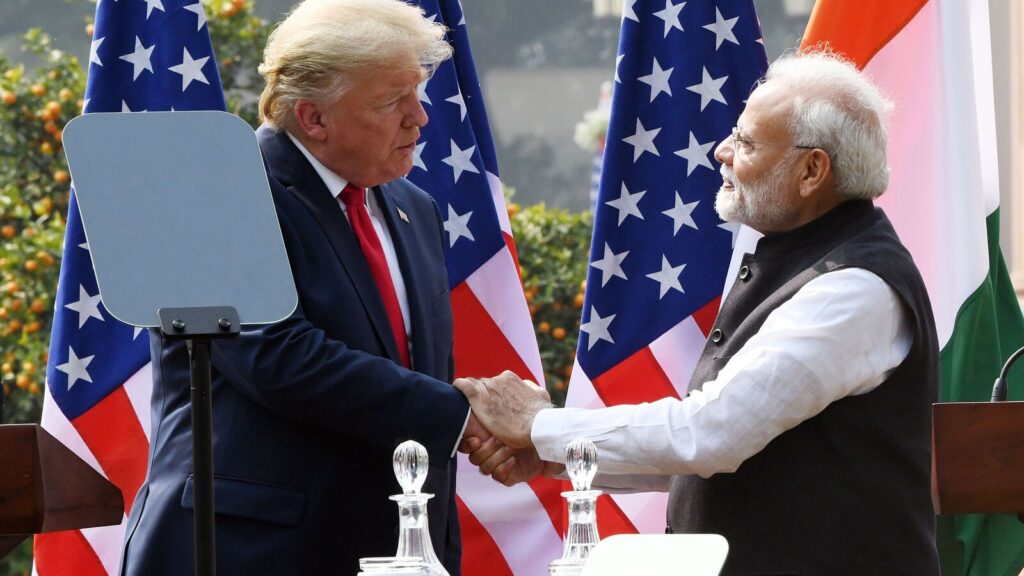
The Global Energy Chessboard: A New Alignment
The global energy landscape is undergoing a significant transformation, often likened to a complex “chess game” where traditional alliances and trade routes are being redefined. This evolving dynamic is marked by a notable shift in oil trade partnerships and the emergence of new geopolitical alignments, profoundly influencing the dynamics of **India US Russian oil** relations.
Historically, the global oil market has been dominated by established relationships between major producers and consumers. However, recent geopolitical events, such as conflicts and sanctions, coupled with technological advancements in energy production and the accelerating global push towards clean energy, are reshaping these long-standing structures. Nations are actively seeking diversification in their energy sources and suppliers, leading to the formation of novel economic and strategic alliances. This re-alignment impacts not only oil supply chains but also broader international relations and economic stability.
The rise of influential blocs such as BRICS, with members like Russia, China, and India, is increasingly influencing global commodity markets, including oil, as they explore alternative trade mechanisms and currencies. This evolving chessboard necessitates a deeper understanding of the new players and their strategies in the critical sector of global energy, especially as traditional Western-dominated structures face challenges from emerging economies. The current situation highlights a complex interplay where economic imperatives often intersect with geopolitical considerations, creating a fluid and unpredictable environment for global energy security and international diplomacy. As countries like India navigate this new landscape, their decisions on oil procurement have far-reaching implications for global power balances and economic partnerships.
India’s Energy Imperative: Balancing Needs and Relations
India’s significant reliance on Russian oil stems primarily from a compelling combination of economic necessity and astute energy security considerations, especially amidst fluctuating global energy markets. As one of the world’s largest and fastest-growing major economies, India has a massive and ever-increasing demand for energy to fuel its ambitious industrial growth and meet the burgeoning needs of its vast population. This imperative drives its pragmatic approach to securing oil supplies, even when it involves navigating complex geopolitical waters involving **India US Russian oil** dynamics.
Economic Pragmatism: The Driving Force
The primary motivation for India’s continued purchase of Russian crude oil is overwhelmingly economic. Following the imposition of international sanctions on Russia by Western nations, Moscow began offering substantial discounts on its crude oil exports. For a nation like India, where energy imports heavily impact the national budget and trade deficit, securing oil at reduced prices provides an unparalleled economic advantage. These discounted rates are crucial for mitigating inflationary pressures within the country and stabilizing domestic fuel prices, which directly benefits millions of consumers and thousands of industries across the subcontinent. This economic pragmatism is a cornerstone of India’s energy policy, prioritizing affordability to sustain its rapid development trajectory and ensure macroeconomic stability. The ability to purchase large volumes of oil at favorable prices has allowed India to save billions of dollars, directly impacting its fiscal health and development goals.
Enhancing Energy Security: Diversifying Supplies
Beyond cost, energy security plays a vital and strategic role in India’s decision-making regarding its oil imports. India is highly dependent on oil imports to meet approximately 85% of its energy needs, making it inherently vulnerable to global price volatility and potential supply disruptions from traditional Middle Eastern suppliers. By diversifying its oil sources and securing a stable, albeit discounted, supply from Russia, India aims to enhance its energy security and reduce its susceptibility to geopolitical events that could impact other traditional suppliers. This strategy helps to ensure a consistent flow of crude oil, which is absolutely crucial for maintaining economic stability, preventing energy shortages, and supporting the nation’s ambitious growth targets. This diversification is a deliberate step to build resilience into its energy supply chain, ensuring that its economy can continue to grow without being held hostage by single points of failure or extreme price swings in the global market.
The strategic importance of this diversification is further underscored by India’s broader energy transition goals. While committed to clean energy, the demand for fossil fuels will continue to rise in the short to medium term due to industrialization and urbanization. Therefore, securing affordable and stable conventional energy sources is a bridge to its greener future. India’s multi-faceted approach to energy, balancing immediate needs with long-term sustainability, is a testament to its strategic autonomy in foreign policy and its commitment to national interests above all else. For further insights into India’s energy transition and economic outlook, consider exploring articles like “India’s Clean Energy Transition: The Economics of a Green Future” and “Navigating India-Russian Oil Rupee” on World Gossip. India’s ability to navigate the complex landscape of **India US Russian oil** trade highlights its growing stature as a significant global player.
The US Perspective: Sanctions, Stability, and Strategic Concerns
The United States views the dynamics of **India US Russian oil** trade through a multifaceted lens, balancing its strategic objectives of isolating Russia with the imperative of maintaining global energy market stability and preserving key alliances. While the US has spearheaded an extensive sanctions regime against Russia following the conflict in Ukraine, its approach to India’s continued procurement of discounted Russian oil has been notably nuanced.
Sanctions Strategy and Objectives
The primary objective of US-led sanctions on Russian oil exports, particularly the G7 price cap mechanism, is to significantly reduce Moscow’s revenue from oil sales, thereby limiting its ability to finance its military actions, while simultaneously ensuring that Russian oil continues to flow into the global market to prevent severe price spikes. The price cap aims to deprive Russia of windfall profits without completely removing its oil from supply, which could trigger a global energy crisis. The US has continuously urged allies and partners to adhere to these sanctions and avoid actions that could undermine their effectiveness.
Balancing Act with India: Strategic Partnership vs. Sanctions Enforcement
India, as a crucial strategic partner in the Indo-Pacific region, especially within the Quad framework, presents a complex diplomatic challenge for the US. Washington has acknowledged India’s legitimate energy needs and its right to make sovereign decisions about its energy procurement. However, US officials have also consistently expressed concerns about the implications of India’s substantial Russian oil purchases, fearing that they indirectly provide financial support to Moscow and potentially undermine the broader sanctions architecture. This concern highlights a delicate balancing act for the US: how to maintain robust strategic cooperation with India while simultaneously advancing its foreign policy goals against Russia.
The US has largely refrained from imposing secondary sanctions on Indian entities involved in Russian oil trade, opting instead for diplomatic engagement and encouragement towards diversification. This stance reflects a recognition of India’s economic imperatives and its historical non-alignment, as well as the desire not to alienate a key partner needed to counterbalance China’s growing influence. The US has emphasized transparency in these transactions and urged India to ensure that its purchases are made below the G7 price cap, further attempting to align India’s economic pragmatism with Western sanctions goals. The complexity of this situation underscores the evolving nature of international alliances, where economic interests and geopolitical priorities do not always perfectly align, creating friction points within otherwise strong partnerships like the one between the US and India. This ongoing dialogue shapes the future of **India US Russian oil** relations.
Impact on Global Energy Market and Geopolitical Implications
The US also closely monitors how the large volumes of discounted Russian oil flowing to countries like India and China affect global energy market dynamics. While the price cap aims to keep oil flowing, the sheer scale of redirected Russian crude can influence global benchmarks and potentially create arbitrage opportunities that challenge the intended effects of sanctions. The US strategy therefore also involves efforts to diversify global energy supplies and reduce overall dependence on Russian hydrocarbons. This includes encouraging increased production from other sources and accelerating the global clean energy transition, thereby reducing Russia’s long-term leverage as an energy supplier.
From a broader geopolitical perspective, India’s continued engagement with Russia on energy matters, despite Western pressure, highlights the emergence of a more multipolar world order. It signals that nations prioritize their national interests and strategic autonomy, even when these diverge from the preferences of major powers. The US, while acknowledging this reality, continues to emphasize the importance of upholding international norms and working collectively to address geopolitical challenges. The long-term implications for the **India US Russian oil** trade remain a critical area of focus for US foreign policy, as it navigates the delicate balance between sanctions efficacy, global energy stability, and the strengthening of vital partnerships.
Economic Currents and Diplomatic Waters: Impact and Interplay
The global oil market is a complex web of economic incentives and geopolitical maneuvers, particularly evident in the evolving trade relationships between oil-producing and oil-consuming nations. When examining the economic implications for key players in the **India US Russian oil** trade, such as Russia, India, and China, the interplay of potential tariffs, shifting trade balances, and intricate diplomatic interactions becomes glaringly clear.
Reshaping Global Energy Flows
Following extensive Western sanctions on Russian oil exports, both India and China significantly increased their imports of discounted Russian crude. This surge dramatically reshaped global energy flows and trade balances. For instance, India’s imports of Russian oil soared, making Russia its largest oil supplier in 2023, often at prices well below the G7 price cap. This strategic shift allowed India to save billions of dollars on energy imports, providing a crucial economic cushion amidst global inflationary pressures. This reorientation has been a significant factor in India’s overall trade balance, substantially reducing its import bill from other traditional suppliers [Source: S&P Global Commodity Insights – India Becomes Top Buyer of Russian Crude in 2023]. Similarly, China has also been a major beneficiary, absorbing a substantial portion of Russian Urals crude, which has helped stabilize its energy costs amidst global volatility and strong domestic demand [Source: Reuters – Russia Sends More Oil to Asia as China, India Buoy Exports]. The pivot by Russia towards Asian markets has fundamentally altered long-standing trade routes, creating new logistical challenges but also new opportunities for economic partnerships.
Russia’s Economic Adaptation
From Russia’s perspective, redirecting its oil exports from Europe to Asia has been absolutely crucial for maintaining its revenue streams despite Western sanctions. This strategic pivot, however, often involves accepting discounted prices and navigating complex payment mechanisms, sometimes settling trade in non-dollar currencies like the Indian Rupee or Chinese Yuan [Source: WorldGossip.net – Navigating India-Russian Oil Rupee]. While this strategy mitigates the immediate economic impact of sanctions by providing alternative markets, it also influences Russia’s long-term economic strategy and its increasing reliance on Asian markets. The reliance on non-Western currencies for trade settlement also signals a broader effort by Russia to de-dollarize its economy and build a more resilient financial system less vulnerable to Western financial pressures.
Diplomatic Nuances and Strategic Autonomy
The diplomatic waters surrounding this oil trade are highly intricate. For India and China, continuing to import Russian oil, despite considerable Western pressure, highlights their unwavering commitment to energy security and national economic interests. This stance has, at times, led to diplomatic friction with Western nations advocating for stricter adherence to sanctions. However, both India and China have consistently defended their decisions, emphasizing their sovereign right to secure essential energy supplies and pointing out the legal ambiguities of extraterritorial sanctions [Source: WorldGossip.net – Oil Price Russia Sanctions Global Shift]. Their approach reflects a broader assertion of strategic autonomy in a rapidly evolving multipolar world. India, in particular, emphasizes its non-aligned foreign policy tradition, seeking to maintain good relations with all major powers while prioritizing its national development agenda.
The dynamic interplay also extends to the potential for future tariffs and trade disputes. While direct tariffs on Russian oil by India or China are unlikely, the lingering threat of secondary sanctions from Western powers remains a significant diplomatic tool. Moreover, the shift in trade routes and the growing reliance on non-Western financial systems could lead to broader discussions on global trade norms and the future of the international financial order. The economic currents driven by this oil trade are thus inextricably linked to the diplomatic strategies employed by all three nations, shaping not only their bilateral relationships but also their positions within the evolving multipolar global landscape, directly impacting the multifaceted relationship surrounding **India US Russian oil**.
Looking Ahead: The Future of India’s Oil Strategy and International Relations
India’s energy landscape is poised for significant evolution, driven by a burgeoning economy, a rapidly growing population, and a strategic imperative to diversify its energy sources. While oil remains a critical component of its energy basket for the foreseeable future, the nation is increasingly focused on a multi-pronged approach that meticulously balances immediate energy security, sustainable economic growth, and intricate diplomatic relations, particularly concerning the evolving dynamics of **India US Russian oil**.
Evolving Oil Procurement Strategy
India, currently the world’s third-largest oil consumer, has historically relied heavily on imports. Looking ahead, its procurement strategy is expected to pivot towards even greater diversification and a gradual, yet significant, shift towards cleaner energy sources. Despite a strong global push for decarbonization, India’s oil demand is projected to continue rising, driven by relentless industrialization, expanding transportation needs, and urbanization [Source: International Energy Agency – India Energy Outlook 2021]. This growing demand necessitates a robust and flexible procurement strategy.
To mitigate inherent supply risks and volatile price fluctuations, India is likely to continue exploring new sourcing partnerships beyond its traditional West Asian suppliers. This includes strengthening energy ties with African and Latin American producers, thereby broadening its geopolitical reach for energy resources. Furthermore, strategic investments in domestic exploration and production, though challenging due to geological complexities and technological requirements, will remain a long-term goal aimed at gradually reducing import dependence. The focus on enhancing energy security also includes building substantial strategic petroleum reserves and actively exploring new trade mechanisms, such as rupee-denominated transactions, to reduce reliance on the US dollar and Western financial systems [Source: WorldGossip.net – Navigating India-Russian Oil Rupee]. This comprehensive strategy is designed to ensure stability and resilience in its energy supply chain for decades to come.
Long-Term Impact on India-US Relations
India’s energy choices, particularly its continued procurement of discounted Russian oil amidst Western sanctions, have undoubtedly introduced complexities into its otherwise strengthening relationship with the United States. While the US acknowledges India’s immense energy needs and its sovereign right to make economic decisions, it has also expressed concerns over the financial support indirectly provided to Russia through these transactions [Source: Carnegie Endowment for International Peace – India’s Oil Purchases from Russia and Implications for India-U.S. Relations]. This dynamic forms a crucial part of the **India US Russian oil** narrative.
In the long term, the trajectory of India-US energy relations will depend on a delicate balancing act. India’s commitment to strategic autonomy in foreign policy means it will likely continue to prioritize its national interests, including the affordability and security of its energy supply. However, the two nations share significant common ground in areas like clean energy transition, climate change, and energy efficiency. Increased collaboration in renewable energy technologies, hydrogen production, smart grids, and carbon capture could become a new, vital pillar of their energy diplomacy, potentially easing tensions over traditional fossil fuel procurement. Such collaboration would demonstrate a shared commitment to global energy security and sustainability, fostering stronger ties even amidst divergent views on current geopolitical issues [Source: WorldGossip.net – US-China Emissions: A Climate Dynamic]. For more on India’s broader clean energy ambitions, see “India’s Clean Energy Transition: The Economics of a Green Future” [Source: WorldGossip.net].
The Role of Russian Energy in a Multipolar World
Russia’s enduring role as a major energy supplier, particularly to burgeoning economies like India and China, profoundly underscores the emergence of a more multipolar global energy order. Despite concerted Western efforts to isolate Moscow economically, India’s robust and persistent appetite for discounted Russian crude has undeniably reshaped global oil trade flows. This continued trade highlights India’s pragmatism, its strategic pursuit of national interests, and its refusal to align exclusively with any single geopolitical bloc [Source: Atlantic Council – India-Russia Oil Trade: Implications for Geopolitics, Economy]. This reinforces the significant role of **India US Russian oil** in the global energy landscape.
In this increasingly multipolar world, energy security for nations like India will increasingly involve diversifying geopolitical risks and fostering diverse partnerships. Russia’s willingness to sell oil at favorable terms provides India with a distinct economic advantage and a crucial alternative to more traditional Middle Eastern and Western suppliers. This dynamic reinforces the idea that energy relationships are becoming more fragmented, less dictated by traditional geopolitical alignments, and more influenced by economic realities and strategic autonomy. The long-term implications include potential shifts in the global financial architecture as countries seek alternative payment mechanisms to bypass Western-dominated systems, as explored in “BRICS Global South: A Rising Alliance” [Source: WorldGossip.net]. The future of global energy is undoubtedly one of greater complexity, diverse partnerships, and a continuous renegotiation of geopolitical influence, with India playing an increasingly pivotal role.
Sources
- Atlantic Council – India-Russia Oil Trade: Implications for Geopolitics, Economy
- Carnegie Endowment for International Peace – India’s Oil Purchases from Russia and Implications for India-U.S. Relations
- International Energy Agency – India Energy Outlook 2021
- Middle East Institute – India’s New Approach: Energy Diplomacy and Geopolitics
- Reuters – Russia sends more oil to Asia as China, India buoy exports
- S&P Global Commodity Insights – India Becomes Top Buyer of Russian Crude in 2023
- WorldGossip.net – BRICS Global South: A Rising Alliance
- WorldGossip.net – India’s Clean Energy Transition: The Economics of a Green Future
- WorldGossip.net – Navigating India-Russian Oil Rupee
- WorldGossip.net – Oil Price Russia Sanctions Global Shift
- WorldGossip.net – US-China Emissions: A Climate Dynamic