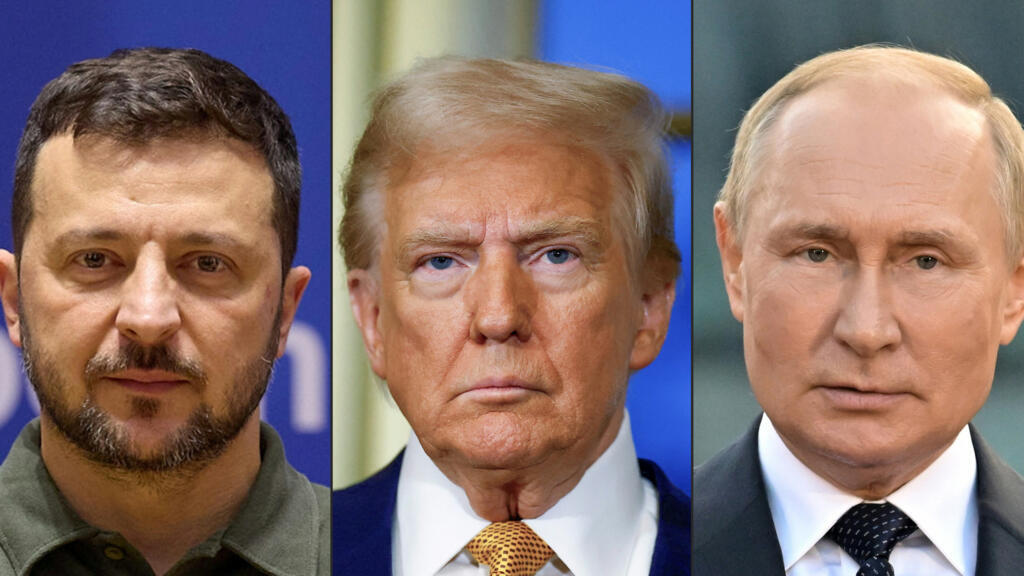
Trump’s Past Engagements with Russia and Ukraine: A Look Back and Forward
The prospect of a Trump Putin Zelenskiy meeting, while hypothetical, demands a thorough understanding of former President Donald Trump’s past interactions with both Russia and Ukraine. His presidency was largely defined by an “America First” foreign policy doctrine, which fundamentally reshaped traditional diplomatic approaches. This ideology emphasized prioritizing domestic interests and a re-evaluation of long-standing international alliances, often leading to a transactional style of diplomacy that could significantly influence any future high-stakes negotiations involving a Trump Putin Zelenskiy meeting.
Russia: A Puzzling and Contradictory Relationship
Throughout his four years in office, Donald Trump consistently expressed a desire for improved relations with Russia and its leader, Vladimir Putin. This stance often diverged sharply from the more confrontational approach favored by many within his own Republican party and the U.S. intelligence community. Several key moments illustrate the complexity and often contradictory nature of this relationship:
- The Helsinki Summit (2018): Perhaps the most controversial instance was the 2018 summit in Helsinki, Finland. During a joint press conference, Trump appeared to give credence to Putin’s denials regarding Russian interference in the 2016 U.S. presidential election, seemingly siding with the Russian leader over the findings of his own intelligence agencies. This drew widespread criticism from both Democrats and Republicans alike, highlighting a perceived deference to Russia that baffled many observers. Despite the public optics, the implications for potential future discussions, such as a hypothetical Trump Putin Zelenskiy meeting, are significant, suggesting a readiness to engage directly with Putin, even if it means challenging established narratives. Council on Foreign Relations – Russia
- Questioning NATO’s Value: Trump repeatedly questioned the fundamental value of the North Atlantic Treaty Organization (NATO) and its collective defense principle, Article 5. His criticisms focused on what he perceived as disproportionate financial burdens on the United States and a lack of commitment from European allies. This skepticism was seen by some as undermining the transatlantic alliance, potentially benefiting Russia by weakening Western unity and cohesion. Should a future Trump Putin Zelenskiy meeting materialize, Trump’s historical skepticism towards multilateral alliances could mean a preference for bilateral deals over broader collective security frameworks. Council on Foreign Relations – Russia
- Sanctions and Aid: Despite his public rhetoric and stated desire for closer ties, the Trump administration did implement various sanctions against Russia for its aggressive actions, including its annexation of Crimea and interference in foreign elections. Furthermore, his administration provided lethal aid to Ukraine, an action that ran counter to his expressed desire for warmer relations with Moscow. This created a notable duality in his foreign policy: while his rhetoric often aimed to de-escalate tensions with Russia, his administration’s actions sometimes followed more traditional foreign policy lines. This internal contradiction suggests that a future Trump Putin Zelenskiy meeting orchestrated by Trump could involve a mix of unexpected overtures and pragmatic, albeit less publicized, leveraging of economic and military tools. Council on Foreign Relations – Russia
Ukraine: The Impeachment Saga and Transactional Diplomacy
Donald Trump’s dealings with Ukraine became a central and tumultuous aspect of his presidency, ultimately leading to his first impeachment. The controversy revolved around allegations that he leveraged critical military aid to Ukraine, specifically withholding it, to pressure President Volodymyr Zelenskyy into initiating investigations into his political rivals, notably Joe Biden and his son Hunter Biden. This incident starkly highlighted the transactional nature of Trump’s “America First” approach to foreign policy, where critical decisions were perceived by critics as being tied to personal political gain rather than broader strategic interests or the promotion of democratic values abroad. The fallout from this saga could profoundly shape the dynamics of any future Trump Putin Zelenskiy meeting, as both leaders would likely recall the immense pressure and political maneuvering that defined their previous interactions. worldgossip.net – Trump, Ukraine, & Weapons: The Impeachment Saga
“America First” and the Architecture of Future Negotiations
The enduring influence of the “America First” principle, characterized by a deep skepticism towards international agreements, institutions, and traditional alliances, suggests that any future negotiations led by Donald Trump concerning the Russia-Ukraine conflict would likely prioritize perceived direct benefits to the United States above all else. His approach, if he were to facilitate a Trump Putin Zelenskiy meeting, could involve several distinct characteristics:
- Preference for Direct Deal-Making: Trump has historically favored one-on-one negotiations with foreign leaders, particularly with strongmen like Vladimir Putin. This preference for direct engagement, potentially bypassing established diplomatic channels and multilateral frameworks, could lead to a pursuit of quick resolutions. Such an approach might prioritize immediate, visible wins over long-term strategic stability, making a Trump Putin Zelenskiy meeting less predictable but potentially more decisive in its outcomes. Council on Foreign Relations – Russia
- Leverage through Aid and Sanctions: Despite his past skepticism about providing foreign aid without clear reciprocal benefits, Trump might strategically use the promise or withdrawal of financial and military assistance to both sides as a potent bargaining chip in a Trump Putin Zelenskiy meeting. Similarly, the easing or imposition of sanctions on Russia would likely be a significant point of leverage, used to extract concessions rather than purely as a punitive measure.
- Focus on Cost-Benefit Analysis: His primary objective would likely be to reduce American financial and military involvement in the conflict, viewing it primarily through a lens of domestic cost rather than global stability, democratic principles, or the territorial integrity of Ukraine. This could translate into significant pressure on European allies to bear a greater burden of the conflict’s resolution and reconstruction, potentially leading to a shift in the established security architecture. Any potential agreement arising from a Trump Putin Zelenskiy meeting would be heavily scrutinized for its immediate economic implications for the U.S.
- Disregard for Traditional Norms: A willingness to disregard established international norms, protocols, and alliances could define his negotiating style if a Trump Putin Zelenskiy meeting were to occur. This could manifest in unconventional proposals, a readiness to make unexpected concessions, or even a sudden shift in policy that a more traditional administration might avoid. His approach would be guided by what he defines as American interests, even if it means disrupting the status quo.
Ultimately, a renewed Trump presidency would likely approach any proposed negotiations concerning Russia and Ukraine, including the hypothetical Trump Putin Zelenskiy meeting, through a pragmatic, self-interested calculus. The aim would be to achieve a resolution perceived as advantageous to the United States, potentially with less emphasis on the territorial integrity of Ukraine or the broader geopolitical implications for Europe and NATO. This pragmatic stance could lead to unexpected diplomatic initiatives but also carries the risk of alienating allies and undermining long-standing international principles.
Russia’s Strategic Goals and Demands: An Examination of Public Positions
While specific, detailed demands Russia might present for a hypothetical summit, such as a Trump Putin Zelenskiy meeting in 2024, are not publicly available in the detailed format required for comprehensive analysis, it is possible to infer their broader strategic goals based on publicly articulated positions and historical actions. Russia’s stated objectives for its actions in Ukraine have consistently revolved around several key themes, even if the precise concessions Vladimir Putin might seek in direct negotiations remain fluid and undisclosed to the public. For any meaningful Trump Putin Zelenskiy meeting, these underlying objectives would undoubtedly form the bedrock of Russia’s negotiating position.
Historically, and particularly since the full-scale invasion in February 2022, Russia’s rhetoric has focused on:
- “Demilitarization” and “Denazification” of Ukraine: These highly contentious terms, used by Russia to justify its invasion, imply a desire to strip Ukraine of its military capabilities and to remove its current government, which Russia falsely labels as “Nazi.” In any negotiation, Russia would likely seek guarantees regarding Ukraine’s military size and armament, aiming to establish Ukraine as a non-threatening, neutral state.
- Ukraine’s Non-Alignment and Neutrality: A core Russian demand has always been a guarantee that Ukraine will not join NATO or any other Western military alliance. This perceived threat from NATO expansion has been a driving force behind Russian foreign policy for decades. Any future discussions, including a Trump Putin Zelenskiy meeting, would almost certainly center on Ukraine’s geopolitical orientation and security architecture. Russia would push for legally binding commitments to Ukraine’s neutrality.
- Recognition of Annexed Territories: Russia has formally annexed Crimea (2014) and, following sham referendums in 2022, also claimed parts of Donetsk, Luhansk, Kherson, and Zaporizhzhia regions as its own territory. A key demand in any peace negotiation would undoubtedly be the international recognition of these territories as part of the Russian Federation. This demand directly clashes with Ukraine’s fundamental principle of territorial integrity.
- Security Guarantees for Russia: Moscow has consistently argued that its actions are a response to what it perceives as security threats posed by NATO and Western expansion near its borders. In any peace framework, Russia would seek comprehensive security guarantees for itself, likely involving restrictions on military deployments and missile systems in Eastern Europe.
- Lifting of Sanctions: While not always explicitly stated as a precondition for talks, the lifting of Western sanctions imposed on Russia since 2014, and especially since 2022, would be a major objective for Moscow in any comprehensive peace deal. This would represent a significant economic concession from the international community.
Given the lack of specific details on Russia’s exact demands for a hypothetical Trump Putin Zelenskiy meeting, it is crucial to understand that these general strategic goals are often presented as non-negotiable by Moscow. The challenge for any mediator, including a potential Trump administration, would be to find common ground between these maximalist Russian demands and Ukraine’s steadfast position on its sovereignty and territorial integrity.
Ukraine’s Unyielding Stance: Demands and Desired Outcomes
Ukraine maintains an unyielding stance on its territorial integrity and national security, a position consistently articulated by President Volodymyr Zelenskyy. This unwavering resolve forms the bedrock of Ukraine’s negotiating position, and it would be a non-negotiable factor in any potential dialogue, including a hypothetical Trump Putin Zelenskiy meeting. A cornerstone of this resolve is the unequivocal demand for the complete restoration of Ukraine’s internationally recognized borders, including Crimea, which was illegally annexed by Russia in 2014, and all territories occupied since the full-scale invasion in February 2022. This commitment means a return to the 1991 borders, a line in the sand for Kyiv that directly challenges Russia’s territorial claims. Reuters – Ukraine’s Zelenskiy says peace talks could start tomorrow if Russia withdraws
The “Peace Formula”: A Comprehensive Path to Resolution
President Zelenskyy’s “Peace Formula” outlines ten crucial points that serve as the foundational framework for any potential resolution to the conflict. This comprehensive plan is not merely a set of demands but a holistic vision for a just and lasting peace, built upon international law and human rights. Each point in the formula addresses a critical dimension of the conflict and its consequences, and they would all be central to Ukraine’s agenda in any discussion, including a Trump Putin Zelenskiy meeting. These points include:
- Radiation and Nuclear Safety: Ensuring the security of nuclear facilities, particularly the Zaporizhzhia Nuclear Power Plant, which remains under Russian occupation, and preventing any nuclear incidents.
- Food Security: Guaranteeing unhindered access to Ukrainian grain exports to prevent global food crises, crucial for global stability.
- Energy Security: Restoring Ukraine’s energy infrastructure and ensuring stable energy supplies for the country and Europe.
- Release of All Prisoners and Deportees: Demanding the return of all Ukrainian prisoners of war, civilian hostages, and children forcibly deported to Russia.
- Restoration of Ukraine’s Territorial Integrity: As stated, this is the absolute red line – full restoration of Ukraine’s 1991 borders.
- Withdrawal of Russian Troops and Cessation of Hostilities: The immediate and complete withdrawal of all Russian forces from Ukrainian territory as a precondition for peace.
- Justice: This includes accountability for war crimes, reparations for damages caused by the conflict, and the establishment of a special tribunal to prosecute the crime of aggression against Ukraine.
- Environmental Protection: Addressing the extensive environmental damage caused by the war and ensuring ecological restoration.
- Prevention of Escalation: Mechanisms to prevent future aggression and ensure lasting peace and security in the region.
- Confirmation of the War’s End: A formal agreement and international guarantees that definitively mark the end of the conflict.
The summit mentioned in the source material, and indeed Ukraine’s broader diplomatic efforts, aim to build robust international support around these principles, rather than engaging in direct negotiations with Russia, which Ukraine views as premature until Russia commits to a full withdrawal of its forces. This indicates that Ukraine would approach a Trump Putin Zelenskiy meeting with a clear, predefined framework, seeking buy-in for its formula rather than starting from a blank slate. President of Ukraine – President of Ukraine Presented the Peace Formula at the G20 Summit; SWI swissinfo.ch – Zelenskyy to pitch peace formula at Swiss summit after Russia rebuffs it
Key Desired Outcomes from a Summit
For Ukraine, the desired outcomes from any international summit or high-level meeting, including a hypothetical Trump Putin Zelenskiy meeting, are multifaceted and strategically vital:
- Solidifying Global Backing: Securing widespread international endorsement for Ukraine’s peace plan is paramount. This legitimizes Kyiv’s position and increases diplomatic pressure on Russia.
- Increasing Pressure on Russia: Through sustained international unity and condemnation, Ukraine seeks to isolate Russia further and compel it to cease its aggression and withdraw from occupied territories.
- Mobilizing Further Aid: A summit serves as a crucial platform to mobilize additional international financial, military, and humanitarian aid for Ukraine, supporting its defense, reconstruction efforts, and humanitarian needs.
- Future Security Guarantees: Ukraine seeks robust and concrete security guarantees from international partners to prevent similar aggression in the future. These guarantees would ideally ensure lasting peace and stability in the region and deter future Russian adventurism. This could involve new security architecture arrangements or strengthened existing alliances that explicitly protect Ukraine’s sovereignty.
The emphasis for Ukraine remains on achieving a just and lasting peace based on the principles of international law, with absolutely no compromises on its sovereignty or territorial integrity. This steadfast position defines Ukraine’s approach to any potential Trump Putin Zelenskiy meeting, ensuring that any discussion would have to address these fundamental demands.
Potential Outcomes of a Trilateral Meeting: Breakthroughs, Stalemates, and Escalation
A trilateral meeting, bringing together three parties with complex and often interwoven interests, such as a hypothetical Trump Putin Zelenskiy meeting, presents a spectrum of potential outcomes. Each scenario carries significant implications for regional and global stability, ranging from decisive breakthroughs that reshape the geopolitical landscape to frustrating stalemates that prolong tensions, or even inadvertent escalation. Understanding these potential outcomes is crucial for assessing the broader impact of such a high-stakes diplomatic engagement.
Breakthroughs: Fostering Cooperation and Stability
A breakthrough in a Trump Putin Zelenskiy meeting would signify the achievement of significant agreement on contentious issues, leading to tangible cooperation and a path towards conflict resolution. In this specific context, a breakthrough could involve:
- A Joint Declaration for Ceasefire and Withdrawal: The most significant breakthrough would be a binding agreement for a comprehensive ceasefire and a clear, verifiable timeline for the withdrawal of Russian troops from Ukrainian territory. This would align with Ukraine’s primary demand for the restoration of its 1991 borders.
- Establishment of Demilitarized Zones and Security Guarantees: Parties might agree on the creation of buffer zones or specific security arrangements that address both Ukraine’s need for protection and Russia’s stated security concerns, without compromising Ukraine’s sovereignty.
- Humanitarian Corridors and Prisoner Exchanges: While smaller in scope, agreements on humanitarian aid delivery, access to occupied territories, and comprehensive prisoner exchanges could signal goodwill and build trust, laying groundwork for more complex political issues.
Such successes, while difficult to achieve given the entrenched positions of Russia and Ukraine, could dramatically reduce tensions, foster trust, and create a precedent for future collaboration. For example, historical trilateral efforts, like those leading to certain arms control treaties or regional economic blocs, have demonstrated how collective action can avert conflict and promote prosperity. Carnegie Endowment for International Peace – Trilateralism in World Order. The implications of such a breakthrough from a Trump Putin Zelenskiy meeting would be overwhelmingly positive, leading to enhanced international stability, more predictable foreign relations, and potentially new avenues for global governance. This aligns with broader efforts towards a rising alliance of nations aiming for global stability, where multilateral cooperation is increasingly sought to address complex global challenges.
Stalemates: Prolonged Tensions and Uncertainty
Conversely, a stalemate in a Trump Putin Zelenskiy meeting would signify a failure to reach meaningful agreement on critical issues. This could occur due to fundamental disagreements, a lack of political will to compromise, or insurmountable trust deficits between the parties. While not necessarily leading to immediate conflict, a stalemate can:
- Prolong Existing Tensions: The lack of progress would mean the conflict continues without a clear path to resolution, perpetuating humanitarian suffering and geopolitical instability.
- Foster Uncertainty: A diplomatic impasse leaves the future of the conflict ambiguous, impacting global markets, energy prices, and international relations.
- Hinder Progress on Critical Global Issues: Resources and diplomatic attention remain tied up in the conflict, diverting focus from other pressing global challenges like climate change, economic stability, or other regional crises.
For instance, prolonged impasses in multilateral trade negotiations or disarmament talks can lead to economic protectionism or an arms race, respectively. Council on Foreign Relations – Regional Organizations. The broader implications of a stalemate from a Trump Putin Zelenskiy meeting would include continued regional instability, a lack of coordinated responses to global challenges, and a potential erosion of faith in diplomatic processes. Such scenarios can also significantly impact economic stability, mirroring concerns about banking margins and economic outlooks in times of prolonged uncertainty, as investment and trade are often curtailed in unstable environments.
Partial Agreements: Incremental Progress Amidst Division
Sometimes, a trilateral meeting like a Trump Putin Zelenskiy meeting might yield partial agreements, where progress is made on certain issues while others remain unresolved. This “agree to disagree” approach can be a pragmatic way to keep communication channels open and build momentum, even if a comprehensive peace deal remains out of reach. In the context of the Russia-Ukraine conflict, partial agreements could include:
- Humanitarian Ceasefires: Agreement on temporary pauses in fighting to allow for the evacuation of civilians or delivery of aid, without addressing the underlying political disputes.
- Specific Prisoner Exchanges: Ad-hoc agreements to exchange prisoners of war or deportees, even if broader issues of justice and accountability are deferred.
- Safe Passage for Shipping: Renewing agreements like the Black Sea Grain Initiative, which ensures safe passage for vital exports, can demonstrate a limited capacity for cooperation.
The implication here is incremental stability, where small steps prevent escalation and lay the groundwork for future, more comprehensive agreements. While not a definitive resolution, partial agreements from a Trump Putin Zelenskiy meeting reflect a cautious approach to international relations, much like how nations navigate complex energy dynamics through gradual shifts and tactical compromises to maintain some level of functional interaction. This scenario acknowledges the deep divisions but prioritizes preventing further deterioration and maintaining a semblance of diplomatic engagement.
Escalation: Heightened Conflict Risk
In the most negative scenario, a Trump Putin Zelenskiy meeting could inadvertently lead to escalation, where unresolved differences are exacerbated, or new disputes emerge. This often happens when underlying tensions are exceptionally high, and diplomatic efforts fail not only to bridge the divides but perhaps even to manage expectations or misinterpretations. Such an outcome carries the severe risk of:
- Increased Military Posturing: A failure of talks could lead to an increase in military drills, deployments, or even direct clashes as parties demonstrate resolve.
- Imposition of Further Sanctions: If one or more parties feel the other side has acted in bad faith or stonewalled, economic sanctions could be intensified.
- Direct Conflict: In the most extreme cases, failed diplomatic overtures can sometimes precede periods of heightened international instability, potentially escalating localized conflicts into broader ones.
Historical examples show that failed diplomatic overtures, particularly in sensitive geopolitical regions, can sometimes precede periods of heightened international instability. JSTOR – The Diplomacy of Peace and the Art of War: Lessons from History. The implications of escalation from a Trump Putin Zelenskiy meeting are severe, threatening regional peace and potentially triggering broader global ramifications. This underscores the delicate balance required in international diplomacy, as even slight missteps or a miscalculation of intentions can lead to significant and devastating consequences, similar to the complexities surrounding global trade policies under shifting leadership, where unpredictable moves can have far-reaching economic and political fallout.
Sources
- Carnegie Endowment for International Peace – Trilateralism in World Order
- Council on Foreign Relations – Regional Organizations
- Council on Foreign Relations – Russia
- JSTOR – The Diplomacy of Peace and the Art of War: Lessons from History
- President of Ukraine – President of Ukraine Presented the Peace Formula at the G20 Summit
- Reuters – Ukraine’s Zelenskiy says peace talks could start tomorrow if Russia withdraws
- SWI swissinfo.ch – Zelenskyy to pitch peace formula at Swiss summit after Russia rebuffs it
- worldgossip.net – BRICS & The Global South: A Rising Alliance?
- worldgossip.net – India’s Banking Margins: Q1 Trends and Outlook
- worldgossip.net – Navigating India-Russian Oil: The Rupee Gambit
- worldgossip.net – Trump & Global Trade: A Turbulent Legacy
- worldgossip.net – Trump, Ukraine, & Weapons: The Impeachment Saga