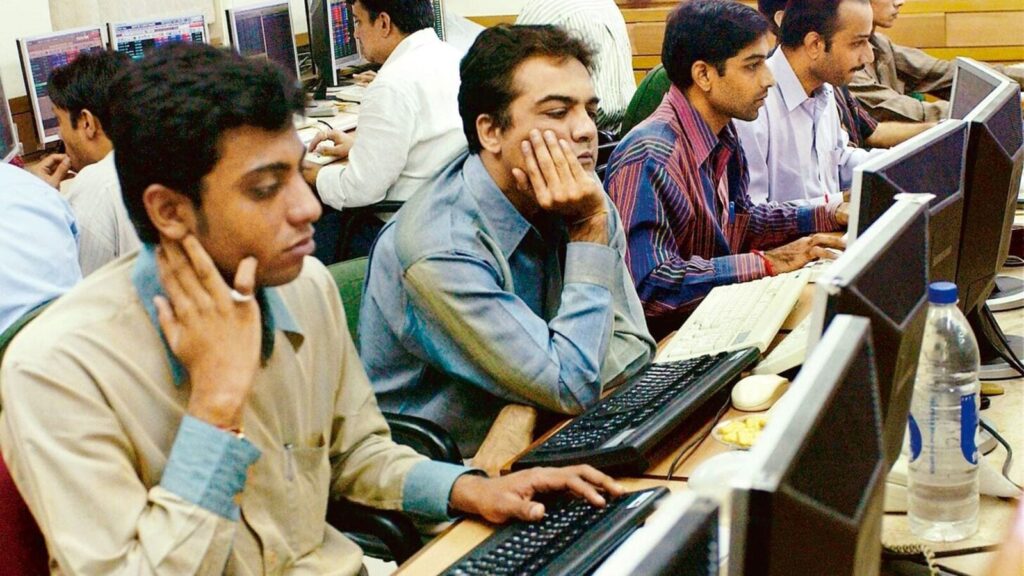
Understanding the Sensex: A Barometer of India’s Economic Health
For investors and economists alike, understanding a **Sensex fall explained** is crucial. The Sensex, an abbreviation for “Sensitive Index,” stands as India’s primary benchmark stock market index. It meticulously tracks the performance of the 30 largest and most actively traded companies listed on the Bombay Stock Exchange (BSE). Established in 1986, the Sensex holds the distinction of being India’s oldest stock index and is widely recognized as a critical barometer reflecting the overall health and sentiment of the Indian economy. Its calculation method, known as “free-float market capitalization,” ensures that only shares readily available for trading in the open market are considered, excluding those held by promoters or governments, thereby providing a more accurate representation of market liquidity and public ownership [Source: Investopedia].
The significance of the Sensex permeates various levels of the Indian financial ecosystem. For the broader Indian economy, its movements are often seen as a direct reflection of the corporate sector’s performance and the prevailing economic sentiment within the country. A consistent upward trend in the Sensex typically signals robust economic growth, elevated investor confidence, and strong corporate earnings. Conversely, a declining Sensex, or a **Sensex fall explained**, can indicate economic slowdowns, uncertainties stemming from policy decisions, or ripple effects from global market turbulence. For instance, the strategic cash reserves maintained by Indian companies can profoundly influence market dynamics, with significant hoarding potentially affecting investment cycles and market liquidity, as comprehensively discussed in India Inc’s Cash Hoarding: Causes, Impact.
For individual investors, the fluctuations in the Sensex are of paramount importance. It serves as a foundational benchmark for evaluating the overall performance of their equity investments. Many investment products, such as mutual funds and exchange-traded funds (ETFs), are specifically structured to mirror the Sensex’s performance, meaning its daily or weekly movements directly influence the returns generated by these investment vehicles [Source: The Economic Times]. Furthermore, the Sensex offers a panoramic view of overarching market trends, empowering investors to make more informed decisions regarding the timing of their stock purchases, sales, or holdings. Understanding broader market influences, such as the implications of regulatory body orders like those from SEBI, can provide crucial additional context to market movements, as thoroughly explored in The Sebi Order and Jane Street: Examining Impact on India’s Stock Market. The index’s daily movements are meticulously monitored by financial analysts, economists, and the general public, offering immediate and valuable insights into investor sentiment and forward-looking economic expectations. Therefore, comprehending the factors behind a **Sensex fall explained** is vital for any participant in the Indian financial market.
Domestic Factors Driving the Sensex
When we consider a **Sensex fall explained**, it is imperative to analyze the myriad domestic factors that exert significant influence over India’s benchmark stock market index. Understanding these intrinsic elements is foundational for investors seeking to effectively navigate the complexities of the Indian market.
**Inflation:** High inflation represents a significant headwind for the Sensex. It systematically erodes the purchasing power of consumers, thereby reducing demand for goods and services. Simultaneously, it increases the cost of raw materials and operational expenses for businesses, inevitably leading to diminished corporate profits. When inflation accelerates beyond desirable levels, the Reserve Bank of India (RBI) typically intervenes by adopting a tighter monetary policy, which often involves raising interest rates to curb inflationary pressures. Such actions can negatively impact stock market sentiment as borrowing becomes more expensive and economic activity slows. Conversely, a scenario of moderate and stable inflation is generally perceived as a hallmark of a healthy and growing economic environment, which can significantly bolster investor confidence and provide a tailwind for the Sensex [Source: Investopedia]. A persistent **Sensex fall explained** often has an inflation component.
**Interest Rates:** Interest rates, primarily determined by the RBI’s monetary policy decisions, wield immense power over the Sensex. When interest rates are low, the cost of borrowing capital for companies decreases substantially. This encourages businesses to undertake new investments, expand their operations, and engage in capital expenditure, all of which contribute to higher corporate earnings and, consequently, elevated stock valuations. Furthermore, lower interest rates render fixed-income investments, such as bonds and bank deposits, less attractive in terms of returns, prompting investors to reallocate their funds towards equities in pursuit of higher yields. Conversely, an upward revision of interest rates translates into increased borrowing costs for businesses, potentially squeezing profit margins, and can also dampen consumer spending by making loans (e.g., for housing or vehicles) more expensive. These effects can collectively lead to a decline in stock prices and contribute to a **Sensex fall explained** [Source: The Economic Times]. For a deeper understanding of the dynamics within India’s financial sector, exploring India’s Banking Margins: Q1 Trends and Outlook offers further insights.
**Corporate Performance:** The vitality and profitability of Indian corporations serve as direct and fundamental drivers of the Sensex’s trajectory. A robust corporate sector, characterized by strong earnings reports, consistent sales growth, and healthy profit margins, signifies a thriving business environment. This positive performance typically translates into higher stock valuations across the board. Beyond mere financial metrics, factors such as astute management efficiency, continuous innovation, strategic market share expansion, and effective cost control also contribute significantly to individual company performance. The aggregate performance of these constituent companies then collectively influences the broader market index. Investors, both domestic and international, meticulously scrutinize quarterly earnings reports, corporate announcements, and management commentaries for critical cues on the prevailing economic trajectory and future outlook, which can either prevent or cause a **Sensex fall explained** [Source: Investopedia].
**Political Environment:** A stable political environment, characterized by clear, predictable, and consistent policy-making, instills a profound sense of confidence in both domestic and international investors. Government policies spanning areas such as taxation, trade agreements, infrastructure development, and foreign direct investment (FDI) can have a profound and direct impact on various economic sectors, and by extension, on the Sensex. Policy stability encourages long-term investment and reduces perceived risks. Conversely, periods of political instability, significant policy uncertainty, or major electoral shifts can introduce considerable volatility into the market and severely dampen investor sentiment, frequently leading to market corrections or even a sustained **Sensex fall explained** [Source: Bloomberg]. A thorough understanding of the broader economic landscape and its intricate impact on the market can also be gleaned from analytical articles such as The Sebi Order and Jane Street: Examining Impact on India’s Stock Market, which delves into specific regulatory impacts.
Global Factors Influencing the Sensex
The Indian stock market, particularly the Sensex, operates within an intricately connected global economic framework. As such, a **Sensex fall explained** often involves a complex interplay of various global factors and events. These external dynamics can significantly amplify or mitigate the effects of domestic influences, creating a highly volatile environment for investors.
**Global Trade Tensions:** International trade tensions represent a prominent global factor. Escalating trade disputes, such as tariffs imposed by major economies or protectionist policies, can severely disrupt global supply chains, affecting the flow of goods and services worldwide. For India, this can translate into reduced demand for its exports, impacting key sectors like IT, textiles, and manufacturing. Such disruptions inevitably lead to volatility in the Indian market, as investor sentiment sours due to uncertainties regarding future earnings and economic growth. Shifts in the trade policies of major global economic players, like the US or China, directly create uncertainty that can cascade into significant effects on investor confidence in India, potentially leading to a **Sensex fall explained** [Source: MarketScreener].
**Economic Fluctuations in Other Countries:** The economic health and performance of other nations, especially major trading partners and developed economies, play a crucial role in influencing the Sensex. A slowdown or recession in these economies can reduce the inflow of foreign institutional investments (FIIs) into India, as global capital seeks safer or higher-yielding avenues. Moreover, it can dampen external demand for Indian goods and services, directly impacting the profitability of export-oriented Indian companies. Conversely, robust global growth fosters an environment conducive to foreign capital inflows, strengthening the market. The interconnectedness of global economies means that economic strains in specific regions, even those seemingly distant like the Asia-Pacific, can have significant ripple effects on India’s market performance, contributing to a **Sensex fall explained** [Source: MarketScreener – Philippine Value of Production Index]. For a broader context on prevailing Indian economic trends, investors often explore our insightful article on India Inc’s Cash Hoarding.
**Changes in International Interest Rates:** Decisions made by central banks in major economies regarding their interest rates can heavily influence the Sensex. When central banks like the U.S. Federal Reserve or the European Central Bank raise interest rates, it can trigger a phenomenon known as “capital outflow” from emerging markets like India. Investors, seeking higher returns with potentially lower risks, may reallocate their capital from Indian equities and bonds back to developed markets. This outflow of foreign capital can weaken the Indian Rupee against major currencies (as indicated by the USD/INR exchange rates), making imports more expensive and potentially fueling inflation, all of which can negatively impact the Sensex and contribute to a **Sensex fall explained** [Source: MarketScreener – Wells Fargo Downgrades KLA]. Understanding these intricate global dynamics is absolutely crucial for comprehending the broader movements of India’s market, as discussed further in our analysis of SEBI orders and their impact on India’s stock market.
Investor Psychology in Market Downturns: Navigating the Emotional Tides
When we talk about a **Sensex fall explained**, it’s not just about economics; it’s deeply rooted in human behavior. Market downturns are not merely economic occurrences; they serve as profound psychological tests for investors, often bringing to the forefront a range of behavioral biases. Understanding the common psychological patterns that frequently emerge during these tumultuous periods—such as panic selling, speculative urges, and the pervasive influence of media narratives—can significantly empower investors to make more rational, less emotionally driven decisions.
**Panic Selling: The Fear-Driven Exodus**
One of the most immediate, visceral, and impactful psychological responses to a declining market is widespread panic selling. This behavior is primarily driven by an intense and overwhelming fear of incurring further losses. Investors, gripped by this fear, often rapidly liquidate their holdings, frequently at substantial discounts or at the market bottom. This phenomenon is deeply rooted in the concept of loss aversion, a well-documented cognitive bias where the psychological pain of experiencing a loss is felt much more intensely than the pleasure of achieving an equivalent gain. During a significant downturn, the emotional discomfort and anxiety of witnessing portfolio values shrink can overwhelm logical, long-term investment strategies, leading to impulsive decisions that unfortunately lock in losses and prevent participation in subsequent recoveries. The herd mentality also plays a crucial role here; as a growing number of investors begin to sell, the fear of being “left behind” or suffering disproportionate losses intensifies, creating a cascading and self-reinforcing effect that accelerates the market decline [Source: Investopedia]. This is a common element of a **Sensex fall explained**.
**Speculation: Chasing Quick Gains in Volatile Times**
Paradoxically, periods of market downturn and heightened volatility can also inadvertently fuel speculation. Some investors, particularly those with a higher tolerance for risk or a deeply ingrained belief in their ability to precisely “time the market,” may attempt to capitalize on rapid price swings. This often involves strategically buying heavily depressed assets in the optimistic hope of a swift and significant rebound, or conversely, engaging in short-selling strategies to profit from anticipated further declines. While successful speculation can indeed yield substantial returns, it is inherently an extremely risky endeavor. Such behavior is frequently driven by overconfidence, a sense of market mastery, or the illusion of control, often leading to significant losses for those who misjudge market bottoms or tops [Source: Investopedia]. Understanding this duality is key to a complete **Sensex fall explained**.
**The Media’s Influence on Market Sentiment**
The media, encompassing financial news outlets, business publications, and online platforms, plays a powerful, albeit often unconscious, role in shaping and amplifying investor psychology during market downturns. Sensational news headlines, dramatic financial reports, and the often urgent expert opinions can either amplify existing fears or create new ones, significantly contributing to market volatility. Highly sensationalized reporting of losses or dire economic forecasts has the potential to exacerbate panic selling, creating a self-fulfilling prophecy. Conversely, overly optimistic narratives during nascent recovery periods can sometimes contribute to the formation of speculative bubbles. It is therefore critical for investors to be discerning and critical consumers of financial news, recognizing that media narratives can often be reactive, emotionally charged, and focused on short-term drama rather than purely analytical, long-term perspectives [Source: Forbes]. A balanced approach involves diligently seeking information from diverse, reputable, and credible sources, and maintaining a steadfast focus on long-term trends rather than getting swayed by daily fluctuations.
Navigating market downturns effectively demands a conscious and deliberate effort to counteract these innate psychological biases. By understanding the underlying triggers behind panic selling and excessive speculation, and by critically evaluating the pervasive influence of media, investors can cultivate a more disciplined, resilient, and ultimately successful approach to managing their investment portfolios. For further insights on broader economic trends and more nuanced investment strategies, consider exploring our articles such as “India Inc Cash Hoarding: Causes and Impact” or “The SEBI Order and Jane Street: Examining Impact on India’s Stock Market”, which provide a broader context for why a **Sensex fall explained** is a multifaceted issue.
Reacting Strategically to a Sensex Dip: Navigating Volatility
A fall in the Sensex, India’s benchmark stock market index, is an event that can undoubtedly trigger anxiety and uncertainty among investors. However, understanding how to react strategically and maintain composure is absolutely crucial for effectively navigating market volatility and safeguarding your long-term investments. This section offers a comprehensive **Sensex fall explained** from an investor’s perspective.
**Understanding a Sensex Dip: Short-Term vs. Long-Term Perspectives**
A significant decline in the Sensex typically signals either a broad market correction—a healthy, albeit uncomfortable, recalibration—or a more serious economic downturn. For **short-term investors** or active traders, a fall can mean immediate and tangible losses, often prompting rapid decisions such as booking profits to preserve gains or cutting losses to mitigate further downside risk. Some sophisticated traders may even employ complex hedging strategies, using derivatives or other financial instruments, to protect their portfolios against adverse price fluctuations [Source: Investopedia]. However, a crucial piece of advice for all investors, especially those with a short-term horizon, is that panic selling is generally discouraged, as it can inadvertently lock in losses and prevent participation in the subsequent, often rapid, market recoveries.
In stark contrast, **long-term investors** often perceive market corrections and dips as invaluable opportunities. Their investment philosophy is fundamentally centered on the long-term growth potential of fundamentally strong companies rather than being swayed by daily or weekly market fluctuations. This approach is firmly rooted in the historical understanding that market downturns are almost always temporary in nature, and equities, over extended periods, consistently tend to recover and deliver positive returns [Source: BSE India]. This longer-term view is essential for a holistic **Sensex fall explained**.
**Strategic Responses for Investors**
When the Sensex experiences a significant tumble, here’s a breakdown of how different types of investors can respond strategically:
* **For Long-Term Investors:**
* **Stay Calm and Avoid Knee-Jerk Reactions:** The single most important response is to remain calm. Emotional decisions, particularly those made in moments of panic, almost invariably lead to suboptimal investment outcomes. It’s imperative to remember that market corrections are a normal, even essential, part of the broader economic and market cycle. A **Sensex fall explained** as a temporary phenomenon is key.
* **Continue Systematic Investment Plans (SIPs):** One of the most effective strategies for long-term investors during a downturn is to continue, or even increase, their Systematic Investment Plans (SIPs). By investing a fixed amount regularly, investors buy more units when prices are low (during a dip) and fewer units when prices are high. This strategy, known as “averaging down,” significantly reduces the average cost of acquisition and can considerably enhance overall returns when the market eventually rebounds.
* **Focus on Diversification:** A well-diversified portfolio, strategically spread across various asset classes (e.g., equities, debt, gold), different sectors (e.g., technology, finance, healthcare), and varying market capitalizations (e.g., large-cap, mid-cap, small-cap), can effectively cushion the impact of a fall in any one particular area or asset class [Source: Investopedia]. Diversification reduces concentrated risk and is crucial for understanding a **Sensex fall explained** resilience.
* **Re-evaluate Fundamentals:** A market dip provides an excellent opportunity to conduct a thorough review of the fundamental strengths and long-term prospects of the companies in which you are invested. Are their business models still robust? Is their management competent? Are their long-term growth prospects still intact despite the prevailing market conditions?
* **Look for Opportunities:** During a market fall, high-quality stocks of fundamentally sound companies might become temporarily undervalued. This presents attractive buying opportunities for long-term investors looking to accumulate assets at a discount and position themselves for future growth when the market recovers.
* **For Short-Term Traders/Investors:**
* **Risk Management:** Strict adherence to risk management principles, including setting precise stop-loss orders to limit potential downside and carefully sizing positions relative to capital, is paramount.
* **Technical Analysis:** Rely heavily on technical indicators and charting patterns to identify potential support and resistance levels, and to make more informed entry and exit decisions based on price action and volume.
* **Avoid Over-Leveraging:** High leverage, while potentially amplifying gains in favorable conditions, can drastically magnify losses during periods of heightened market volatility. It should be used with extreme caution, if at all.
**Expert Advice on Market Recovery**
Market experts consistently emphasize the virtues of patience, discipline, and a long-term perspective during periods of market downturn. Historically, markets have demonstrated an undeniable resilience, always recovering from declines, though the specific timeline for recovery can certainly vary depending on the nature and severity of the shock. For instance, major global financial crises and significant economic shocks have historically been followed by periods of robust recovery and sustained bull markets [Source: Forbes Advisor].
“Market corrections, while undoubtedly uncomfortable and unsettling for investors, effectively serve as a necessary reset button for the entire ecosystem,” notes one seasoned financial analyst. “They play a vital role in pruning out speculative froth, correcting overheated valuations, and allowing asset prices to become more realistic and aligned with underlying fundamentals.” Investors are consistently advised to:
* **Rebalance Portfolios:** If certain asset classes or sectors within your portfolio have become overweight or underweight due to disproportionate market movements, rebalancing can help restore and maintain your desired risk profile and asset allocation strategy.
* **Consult Financial Advisors:** A qualified and experienced financial advisor can provide invaluable personalized guidance tailored to your specific risk tolerance, financial goals, and current market outlook, helping you navigate the complexities of a **Sensex fall explained** with confidence.
* **Stay Informed but Don’t Overreact to News:** While it is undoubtedly important to remain aware of significant economic and financial news, it is equally critical to avoid making impulsive and emotional decisions based on sensational headlines or short-term narratives. For deeper insights into broader economic trends that profoundly influence market movements, consider exploring articles like India Inc Cash Hoarding: Causes & Impact or India’s Clean Energy Transition: The Economics of a Green Future.
Ultimately, a fall in the Sensex is more than just a statistical event; it is a profound test of an investor’s resolve, discipline, and long-term vision. By proactively adopting a well-thought-out strategy, particularly one underpinned by a long-term perspective, consistent systematic investing, and robust diversification, investors can not only effectively navigate market volatility but also position themselves strongly for sustained future growth and wealth creation. Understanding a **Sensex fall explained** completely helps in this journey.
Sources
- Bloomberg – India Stocks Election Risk: Modi Mandate Threatens Bull Run Of Record Gains
- BSE India – Historical Data
- The Economic Times – How interest rates impact the stock market
- The Economic Times – Sensex Explained: What Is The Sensex And Why It Is Important
- Forbes Advisor – How Media Impacts Financial Markets
- Forbes Advisor – History of Stock Market Crashes
- Investopedia – How Inflation Affects Stocks
- Investopedia – Corporate Performance
- Investopedia – Diversification
- Investopedia – Hedging
- Investopedia – Panic Selling
- Investopedia – Sensex
- Investopedia – Speculation
- MarketScreener – Market Data & Financial News
- MarketScreener – Philippine Value of Production Index, Net Sales Index Rise in May
- MarketScreener – Wells Fargo Downgrades KLA to Equalweight From Overweight, Adjusts Price Target to $920 From $870
- WorldGossip.net – India Inc’s Cash Hoarding: Causes, Impact
- WorldGossip.net – India’s Banking Margins: Q1 Trends and Outlook
- WorldGossip.net – India’s Clean Energy Transition: The Economics of a Green Future
- WorldGossip.net – The Sebi Order and Jane Street: Examining Impact on India’s Stock Market