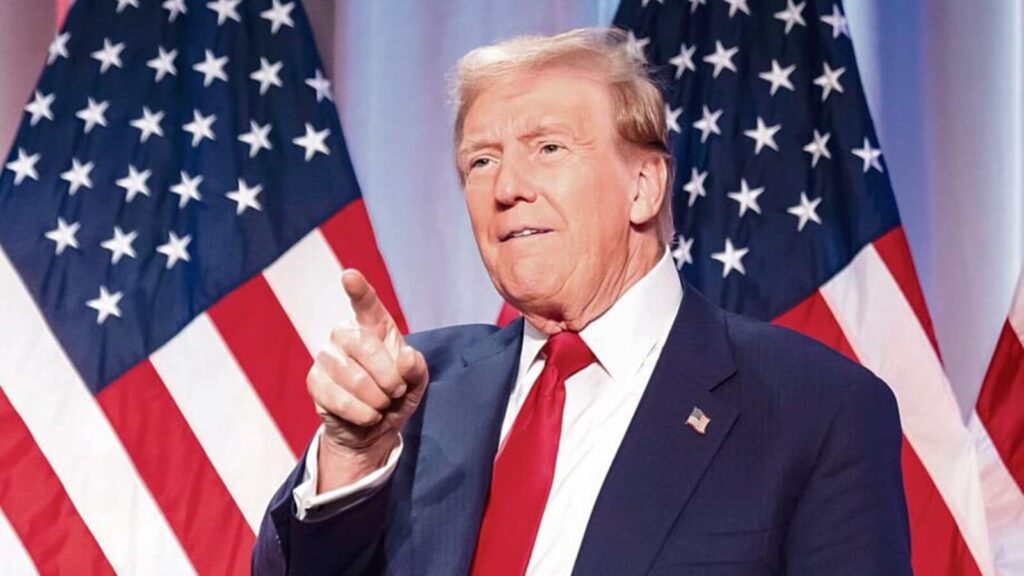
**Trump global trade**: The “America First” doctrine profoundly reshaped U.S. commercial policy, establishing a new paradigm for **Trump global trade** relationships. This approach, centered on prioritizing domestic interests, aimed to rejuvenate American manufacturing, repatriate jobs, and rectify perceived trade imbalances that were considered detrimental to the national economy.
The ‘America First’ Doctrine: Foundations of Trump’s Trade Strategy
The “America First” doctrine served as the bedrock of the Trump administration’s international trade strategy, fundamentally reshaping U.S. commercial policy and setting the stage for a distinct era of **Trump global trade**. This approach prioritized domestic interests above all else, aiming explicitly to bring manufacturing jobs back to the United States and reduce persistent trade deficits, which were consistently viewed as detrimental to the American economy and a symptom of unfair global practices Source: Council on Foreign Relations.
A core tenet of this doctrine was a robust form of protectionism, primarily manifested through the aggressive and widespread use of tariffs. The administration swiftly moved to impose tariffs on a wide range of imported goods, most notably on steel and aluminum, citing national security concerns and the need to protect vital domestic industries. This strategy culminated in the initiation of a significant and prolonged trade war with China, characterized by successive rounds of tariffs on billions of dollars’ worth of goods Source: U.S. Trade Representative. The strategic objective behind these tariffs was multifaceted: to make foreign goods significantly more expensive, thereby encouraging American consumers and businesses to purchase domestically produced products, and simultaneously to incentivize companies to shift their manufacturing and production facilities back to the United States. This aggressive use of tariffs was a defining feature of the administration’s **Trump global trade** policy.
Beyond tariffs, the “America First” strategy also signaled a pronounced shift in diplomatic and economic focus. It strongly favored bilateral trade agreements over multilateral ones, operating under the firm belief that direct, one-on-one negotiations would yield more favorable and tailored terms for the U.S. This marked a significant departure from decades of U.S. policy that often championed multilateral frameworks like the World Trade Organization (WTO). A prime and highly visible example of this new approach was the exhaustive renegotiation of the North American Free Trade Agreement (NAFTA), which ultimately culminated in its replacement by the United States-Mexico-Canada Agreement (USMCA) Source: U.S. Trade Representative. This shift was explicitly designed to secure specific concessions from trading partners that would directly benefit American workers and businesses, often by demanding stricter labor and environmental standards or more favorable market access for U.S. goods.
Furthermore, the administration frequently employed the overt threat of tariffs or withdrawal from existing agreements as powerful leverage to achieve its trade objectives. This approach emphasized a more assertive, and often confrontational, stance in global commerce, contrasting sharply with previous administrations’ more conciliatory or collaborative tones. This tactical use of economic pressure was integral to the administration’s vision for **Trump global trade**, reflecting a transactional foreign policy where economic leverage was a primary tool for achieving national objectives Source: Peterson Institute for International Economics. The ‘America First’ doctrine thus represented not just a change in policy, but a fundamental reorientation of the United States’ role and posture within the intricate web of international trade.
Key Trade Deals and Renegotiations: A Closer Look at Major Agreements
Under the Trump administration, the United States pursued significant and often dramatic shifts in its trade policy, characterized by the rigorous renegotiations of existing agreements and the aggressive pursuit of new bilateral deals. This approach was consistently underpinned by the protectionist “America First” agenda, fundamentally reshaping the landscape of **Trump global trade**.
The United States-Mexico-Canada Agreement (USMCA)
One of the most prominent and impactful actions taken was the comprehensive renegotiation of the North American Free Trade Agreement (NAFTA). NAFTA, which had been in effect for over two decades, was often criticized by the administration for leading to job losses and trade deficits in the U.S. The result of these intensive negotiations was the **United States-Mexico-Canada Agreement (USMCA)**, formally signed in 2020. The USMCA aimed to modernize and update the quarter-century-old NAFTA framework, addressing new economic realities such as digital trade and strengthening provisions related to labor and environmental standards. A central goal was to incentivize the return of manufacturing jobs to the U.S. and to create a more balanced trade relationship across North America Source: U.S. Trade Representative.
Key changes introduced by the USMCA included significantly stricter rules of origin for automobiles. To qualify for tariff-free trade within North America, 75% of auto content was now required to be made in North America, a substantial increase from NAFTA’s 62.5%. Furthermore, a groundbreaking provision stipulated that 40-45% of auto content must be made by workers earning at least $16 per hour, a measure specifically designed to shift high-wage auto production back to the U.S. and Canada from lower-wage facilities in Mexico Source: U.S. Trade Representative. These modifications had profound implications for automotive supply chains and manufacturing investments across the continent, directly reflecting the administration’s focus on domestic job creation within its **Trump global trade** strategy.
U.S.-China “Phase One” Economic and Trade Agreement
Another critical focus of the administration’s trade policy was its complex and often confrontational relationship with **China**. This relationship escalated into a full-blown trade war marked by reciprocal tariffs on hundreds of billions of dollars’ worth of goods. In an effort to de-escalate this significant conflict, the two nations signed the **”Phase One” economic and trade agreement** in January 2020. This agreement committed China to substantially increase its purchases of U.S. goods and services by at least $200 billion over a two-year period, covering categories such as agricultural products, manufactured goods, energy, and services Source: U.S. Trade Representative.
Beyond purchase commitments, the “Phase One” deal also included specific pledges from China on intellectual property protection, a long-standing U.S. concern, alongside commitments to address forced technology transfer practices and currency manipulation. While the agreement provided a temporary truce and offered some relief to American exporters, particularly farmers, many of the original tariffs remained in place. Moreover, significant structural issues in the fundamental U.S.-China trade relationship, such as state subsidies, market access barriers, and the broader role of state-owned enterprises in China’s economy, were left largely unaddressed, indicating that the core tensions remained Source: Peterson Institute for International Economics. This deal highlighted the administration’s transactional approach to **Trump global trade**, seeking specific, measurable commitments rather than systemic changes.
Renegotiation of KORUS (U.S.-South Korea Free Trade Agreement)
The trade agreement with **South Korea, KORUS**, also underwent renegotiation, reflecting the administration’s broad strategy of revisiting existing deals it deemed unfavorable. The revised KORUS FTA, which took effect in 2019, introduced several adjustments aimed at addressing U.S. concerns, particularly regarding trade deficits in certain sectors. Specific changes included extending the phase-out of tariffs on Korean pick-up trucks for U.S. import, and revisions to pharmaceutical pricing and customs procedures Source: U.S. Trade Representative. This renegotiation exemplified the administration’s preference for modifying established agreements to secure more favorable terms for American industries, especially those facing import competition.
Relations with the European Union (EU)
Trade relations with the **European Union (EU)** were marked by persistent tensions, primarily stemming from the U.S. imposition of tariffs on steel and aluminum imports from the bloc. While a comprehensive free trade deal with the EU did not materialize during the administration’s tenure, ongoing negotiations focused on reducing both tariff and non-tariff barriers to trade. Both sides sought to resolve various disputes, which ranged from long-standing disagreements over agricultural products, particularly U.S. beef and chicken exports, to more contemporary issues like digital services taxes proposed by European nations Source: European Commission. These discussions often occurred amidst the recurring threat of additional tariffs from the U.S. side on European goods, including automobiles, showcasing the administration’s willingness to use leverage in its pursuit of more balanced **Trump global trade** relationships.
Other Bilateral Initiatives
Beyond these major players, the administration also pursued other bilateral trade initiatives, though not all resulted in new comprehensive agreements. The overarching approach consistently emphasized bilateral deals over multilateral ones, reflecting a deep-seated desire for more direct control over trade terms and a general skepticism towards global institutions and their perceived inefficiencies or biases. This strategic preference for one-on-one negotiations became a hallmark of the administration’s **Trump global trade** policy, fundamentally altering the U.S.’s engagement with the international trading system.
Impact on American Sectors: Agriculture, Manufacturing, and Beyond
Donald Trump’s trade policies created a complex and often mixed landscape of gains and challenges across various U.S. industries. While some sectors experienced new opportunities and perceived advantages, others faced significant hurdles and disruptions due to the imposition of tariffs, the threat of further trade actions, and the renegotiation of major trade agreements. The wide-ranging effects illustrate the intricate nature of **Trump global trade** policies.
Agriculture: New Markets, but Persistent Challenges
For the vital agricultural sector, Trump’s trade policies aimed explicitly to open new markets and secure more favorable terms for American farmers, who had long faced stiff international competition and fluctuating commodity prices. New trade deals were frequently highlighted for their potential positive impact on U.S. agricultural exports. For instance, specific pacts, such as initial agreements with the European Union, sought to eliminate tariffs on U.S. agricultural goods, coupled with significant EU investments intended to bolster the U.S. economy and strengthen rural infrastructure, thereby creating clearer pathways for American farm products to reach European consumers. Additionally, a revised U.S.-South Korea Trade Agreement (KORUS FTA) reduced tariffs on South Korean goods, which also favorably impacted American agricultural products, enhancing their competitiveness in a key Asian market. These agreements were designed to provide broader and more secure access to global markets for a diverse range of commodities, including those grown in states like Georgia, fostering optimism among local producers Source: Hoodline.
Despite these efforts to create new avenues for trade, the agricultural sector also faced substantial and often devastating challenges, particularly from retaliatory tariffs imposed by major trading partners, most notably China. Beijing’s tariffs on American farm products, especially soybeans, pork, and other key commodities, caused significant financial strain for many U.S. farmers, disrupting long-established supply chains and leading to massive surpluses of products that struggled to find markets. The administration responded with multiple rounds of aid packages, known as the “Market Facilitation Program,” to mitigate these severe losses and provide direct financial support to farmers. However, the pervasive market disruptions created long-term uncertainties for agricultural producers, forcing many to consider diversifying crops, seeking alternative markets, or facing bankruptcy, demonstrating the double-edged sword of **Trump global trade** strategies.
Manufacturing and Automotive: Mixed Outcomes
In the manufacturing sector, particularly the crucial automotive industry, the impact of the administration’s trade policies was similarly varied and complex. Policies were intentionally designed to bring manufacturing jobs back to the U.S. and reduce persistent trade deficits, often involving the imposition of tariffs on imported goods, including steel and aluminum. The rationale was that these tariffs would make imported raw materials more expensive, thereby protecting domestic industries like U.S. steel producers and encouraging local production of goods that would otherwise be imported. While some domestic steel and aluminum producers experienced a temporary boost in demand and prices, these tariffs also led to increased costs for a wide array of U.S. manufacturers that relied heavily on imported materials as inputs for their own products, creating ripple effects across supply chains. For further insights into specific economic impacts, one can explore discussions on Rio Aluminum Tariff Costs, which delve into the complexities faced by industries dependent on these materials.
For the automotive industry, the renegotiation of the North American Free Trade Agreement (NAFTA) into the United States-Mexico-Canada Agreement (USMCA) brought about significant changes intended to boost U.S. auto production and discourage the shifting of production to lower-wage countries. The USMCA included stricter rules of origin requirements, demanding a higher percentage (75%) of vehicle components be made in North America to qualify for tariff-free trade within the bloc. Additionally, a portion of the vehicle content (40-45%) had to be produced by workers earning at least $16 per hour. While this aimed to incentivize domestic manufacturing and high-wage jobs in the U.S. and Canada, it also posed considerable challenges for existing global supply chains, forcing automakers to re-evaluate their production strategies and potentially increasing overall production costs for some Source: U.S. Trade Representative. These new rules complicated sourcing and logistics, demonstrating the direct and often immediate impacts of **Trump global trade** policy on specific industries. Insights into how such tariffs affect profitability can be found by examining analyses like VW US Tariffs and Margins.
Overall, the trade policies of the Trump administration created a complex and dynamic economic environment for various American sectors. While there were clear intentions to strengthen domestic industries, protect jobs, and create what the administration viewed as fairer trade conditions, the actual outcomes varied significantly. Some sectors experienced tangible gains in market access or domestic demand, while others grappled with the disruptive effects of tariffs, retaliatory measures, and the need to adapt to new trade regulations and shifting global supply chains.
Global Responses and Shifting Alliances: International Perspectives on Trade Policy
The trade policies enacted by the Trump administration significantly altered established global trade relationships and prompted varied, often strong, responses from countries worldwide. These actions, frequently characterized by the unilateral imposition of tariffs and a pronounced push for bilateral agreements over multilateral frameworks, led to a fundamental re-evaluation of existing alliances and spurred the formation of new trade dynamics, redefining the landscape of **Trump global trade**.
One notable category of global responses involved new bilateral trade deals that aimed to bolster American sectors, particularly agriculture. For instance, specific agreements forged with the European Union targeted the elimination of tariffs on U.S. industrial goods, including agricultural machinery and select agricultural products. These pacts also projected substantial EU investments in the U.S. economy, alongside increased American energy exports to the bloc. This strategic move was lauded by some, such as Georgia Agriculture Commissioner Tyler J. Harper, who highlighted the tangible positive impact on local farmers through enhanced market access and improved economic conditions, underscoring the administration’s success in carving out specific wins for American producers Source: Hoodline. This demonstrates how targeted bilateral agreements were central to the **Trump global trade** approach.
Similarly, the U.S.-South Korea Trade Agreement (KORUS FTA) underwent revisions that saw a reduction in tariffs on South Korean goods, which, in turn, favored American automobiles and agricultural products by making them more competitive in the South Korean market Source: Hoodline. This reflected a recurring theme in the administration’s trade negotiations: securing concessions that directly benefited key American export industries.
Beyond these high-profile agreements, new trade agreements or intensified negotiations were also pursued with a diverse array of nations, including the United Kingdom, Vietnam, Indonesia, the Philippines, and Japan. These efforts collectively aimed at opening or expanding global markets for American commodities and manufactured goods. This widespread adoption of bilateral and often country-specific approaches marked a significant and deliberate shift from previous administrations’ long-standing reliance on multilateral trade frameworks, such as the World Trade Organization (WTO). This departure fundamentally influenced existing global trade relationships, prompting countries to adapt swiftly to a changing international economic landscape where the U.S. was signaling a preference for direct, often assertive, negotiations.
The impact of this shift was profound. Many traditional U.S. allies found themselves caught between the desire to maintain strong ties with Washington and the economic imperative to protect their own industries from U.S. tariffs. This led to a complex dance of negotiation, concession, and sometimes retaliation. Countries often sought to diversify their trade partners and strengthen regional blocs to reduce their dependence on any single market, including the U.S. The aggressive stance taken by the U.S. under the guise of **Trump global trade** thus fostered a more fragmented and competitive international trading system, where established norms were challenged and new partnerships emerged to navigate the turbulent waters of altered trade policy. This period underscored a strategic pivot in how the U.S. intended to engage with the world on economic terms.
The Enduring Legacy: Long-Term Implications of Trump’s Trade Agenda
The “America First” trade policies championed by former President Trump have set in motion a series of long-term economic and political implications, both within the United States and across the complex global landscape. These policies, fundamentally characterized by the strategic imposition of tariffs and a comprehensive renegotiation of existing trade agreements, were primarily aimed at protecting domestic industries, repatriating manufacturing jobs, and recalibrating what the administration perceived as imbalanced trade relationships. The ripple effects of **Trump global trade** policies are still unfolding, shaping future international commerce.
One of the most notable and debated long-term effects has been on the U.S. agricultural sector. While some specific trade deals forged under the Trump administration, such as those with the European Union, were indeed lauded by officials like Georgia Agriculture Commissioner Tyler J. Harper for their potential to open new markets and boost the economy through tariff elimination on U.S. agricultural exports and significant EU investments in U.S. energy, other aspects of the broader trade agenda have been met with considerably mixed reactions and lasting economic pain Source: Hoodline. For instance, while the U.S.-South Korea Trade Agreement saw a reduction in proposed tariffs on South Korean goods, favoring American automobiles and agricultural products, the larger trade disputes, particularly with China, inflicted significant and prolonged financial damage on many American farmers due to retaliatory tariffs, requiring substantial government aid to mitigate losses and creating persistent uncertainty in agricultural markets.
Beyond specific sectors, the broader impact of the widespread use of tariffs has been a continuous point of contention and economic analysis. The Federal Reserve, for example, reportedly demonstrated reluctance to cut interest rates during certain periods, citing significant uncertainties surrounding these tariffs and their potential to disrupt global supply chains, increase input costs for businesses, and influence consumer spending power. These uncertainties can ripple through the economy, affecting areas like housing affordability and broader consumer confidence Source: FOX 44 News. The long-term implications for global trade relations include a discernible shift towards more bilateral agreements and a potential fundamental re-evaluation of multinational trade frameworks by various nations.
The emphasis on national interests and domestic protection over comprehensive global integration, a hallmark of **Trump global trade**, could lead to a more fragmented and less interconnected international trading system. This fragmentation could, in turn, impact the efficiency and resilience of global supply chains, making them more localized but potentially less cost-effective. Furthermore, the assertive use of tariffs by a major economic power like the U.S. could foster protectionist tendencies worldwide, leading other nations to adopt similar measures in defense of their own domestic industries, potentially escalating trade disputes and hindering global economic growth. This paradigm shift also necessitates closer examination of how individual nations adapt to these changing dynamics. For further insights into specific economic trends and challenges influenced by such policies, one can explore articles on related economic topics on our site, such as India’s Banking Margins: Q1 Trends and Outlook or Oil Price Russia Sanctions: Global Shift, which delve into the complexities of international economic dynamics and how they are shaped by global events and policies that impact **Trump global trade**. The enduring legacy of this trade agenda is likely to be debated for years, influencing future policy decisions and international economic relations.
Sources
- Council on Foreign Relations – Trump’s “America First” Foreign Policy
- European Commission – EU and US reach breakthrough on trade
- FOX 44 News – Where Are Home Prices Headed This Fall?
- Hoodline – Georgia Agriculture Commissioner Tyler J. Harper Applauds New Trade Deals Bolstering Local Farmers
- WorldGossip.net – India’s Banking Margins: Q1 Trends and Outlook
- WorldGossip.net – Oil Price Russia Sanctions: Global Shift
- WorldGossip.net – Rio Aluminum Tariff Costs
- WorldGossip.net – VW US Tariffs and Margins
- Peterson Institute for International Economics – Trump Trade Policy: Where Do We Stand?
- Peterson Institute for International Economics – US-China Phase One Deal: Fact Check
- U.S. Trade Representative – People’s Republic of China
- U.S. Trade Representative – Korea-U.S. FTA
- U.S. Trade Representative – About the United States-Mexico-Canada Agreement (USMCA)
- U.S. Trade Representative – USMCA Overview
- U.S. Trade Representative – US-China Phase One Agreement Fact Sheet