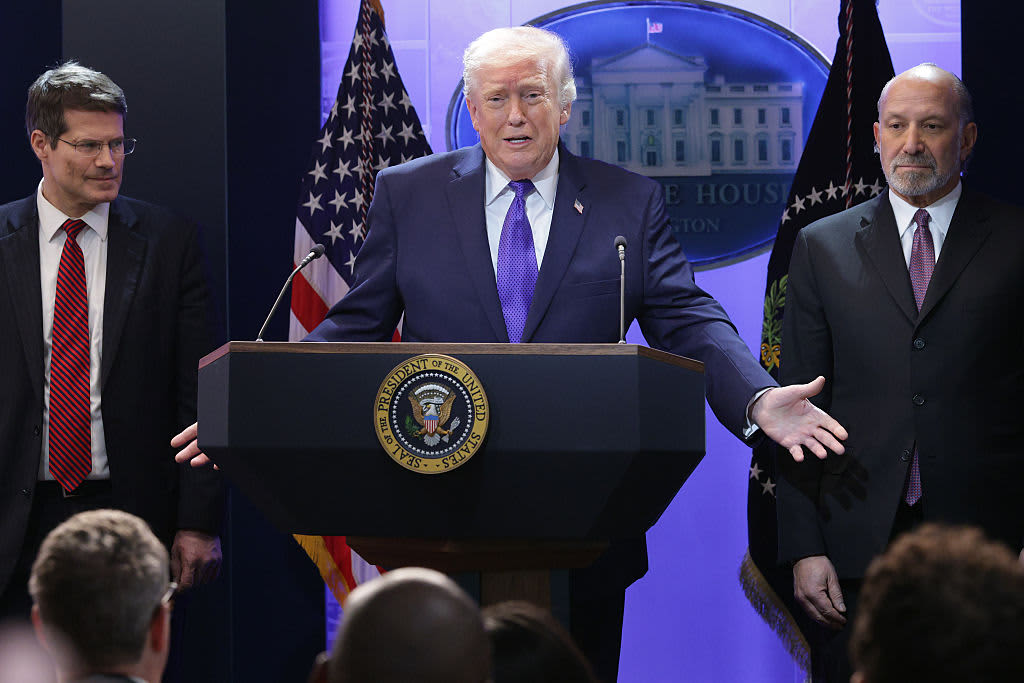
Trump Sets 10% Global Tariff Amid Supreme Court Defeat
In a significant turn of events, President Donald Trump announced a 10% global tariff hours after the Supreme Court delivered a ruling against his authority to impose such tariffs independently of Congress. This decision has stirred considerable debate regarding presidential power and its limitations in economic matters.
Context of the Tariff Announcement
The imposition of tariffs by President Trump has been a hallmark of his administration’s economic policy. Aimed at protecting American industries and reducing trade deficits, the tariffs were met with both support and criticism from various quarters. While proponents argued they were necessary to safeguard jobs within the United States, detractors pointed to the potential for escalating trade wars and higher prices for consumers.
However, following this recent Supreme Court decision, Trump’s administration may find itself in a precarious position. The ruling has raised questions about the balance of power between the executive branch and Congress when it comes to trade regulations.
Supreme Court Ruling Explained
The Supreme Court’s ruling effectively restricted the executive’s ability to levy global tariffs without the consent of Congress. This ruling is seen as a reaffirmation of the constitutional checks and balances that dictate the relationship between different branches of government. In the past, tariffs have been used as a mechanism to exert economic pressure on trading partners, but Trump’s unilateral approach has generated legal challenges and public scrutiny.
Legal experts suggest that this ruling could set a precedent for how future administrations approach trade policy. The implications of this ruling might not only affect Trump’s tariff initiatives but could also reshape how upcoming presidential candidates plan their economic strategies regarding trade.
The Implementation of the 10% Global Tariff
Despite the setback, Trump’s decision to proceed with the 10% global tariff underscores his administration’s commitment to aggressive trade measures. The global tariff aims to impact a range of goods and products imported into the United States, targeting foreign manufacturers and suppliers.
The President announced that this tariff would apply to numerous industries, including manufacturing and technology sectors. The goal is to encourage domestic production and investments. However, this strategy has also sparked concerns among economists regarding potential inflation and increased costs for consumers.
Impact on US Consumers
One of the most immediate concerns regarding the 10% global tariff is its impact on US consumers. Tariffs typically result in higher prices on imported goods, and as costs increase, consumers could find themselves bearing the brunt of these economic decisions. From electronics to clothing, the rise in product prices could see the American public adversely affected.
Consumer advocacy groups have voiced their disapproval, arguing that such tariffs contribute to a rise in living costs and can disproportionately affect middle and lower-income families. This scenario raises critical questions about the potential long-term effects of such tariffs on the American economy.
Business Reactions and Adjustments
The corporate response to Trump’s global tariff announcement has been mixed. Some businesses have expressed cautious optimism about the prospects of increased domestic production. They believe that the tariffs may encourage companies to invest in local manufacturing capabilities.
On the other hand, numerous industry leaders have expressed concern about the volatility that such tariffs can introduce into global supply chains. Companies that heavily rely on imported materials may need to reevaluate their sourcing strategies, which can lead to operational disruptions and increased expenses.
Manufacturers are also grappling with the implications of this tariff on their pricing strategies. As they navigate these changes, companies will need to consider how they can remain competitive while also adhering to the new tariff landscape initiated by the Trump administration.
International Relations at Risk
Another critical aspect to consider is the potential impact of these tariffs on international relations. Countries adversely affected by the imposition of a 10% global tariff may retaliate, leading to a tit-for-tat scenario in global trade. Such actions could exacerbate tensions between the United States and its trading partners, possibly leading to broader trade disputes or even trade wars.
Diplomatic relations, which can already be strained in today’s geopolitical climate, may further deteriorate if countries perceive these tariffs as aggressive economic maneuvers. This could mark a significant shift in how global trade agreements are negotiated moving forward.
The Future of Trump’s Tariff Strategy
The announcement of a 10% global tariff is only the beginning of what could be a prolonged and contentious phase for the Trump administration. While the intent is clear—protecting American industries—the execution of such a policy will require careful navigation through both domestic and international arenas.
Trump’s administration must also contend with the opposition it faces within Congress. As lawmakers react to the Supreme Court ruling, they may push back against future tariff implementations, insisting on greater oversight and legislative involvement in such significant economic decisions. The dialectic relationship between the branches of government regarding tariffs will certainly be scrutinized as lawmakers seek to assert their influence.
Long-term Economic Implications
As the economy responds to the 10% global tariff, analysts will be watching closely to assess its impact on job creation, manufacturing, and consumer spending. In the short term, it may bolster US companies in specific sectors, but the long-term economic implications remain uncertain.
Experts warn that the tariffs could hinder economic growth if they lead to inflation or if foreign markets become less accessible to American goods. The interconnection of global economies means that changes in one area will likely spill over into others, and as businesses adjust to this new landscape, the ripple effects could be profound and far-reaching.
Conclusion
In conclusion, President Trump’s decision to set a 10% global tariff following the Supreme Court’s ruling encapsulates the complex interplay of economics, law, and international relations. As the nation grapples with the repercussions of this decision, the dialogue around presidential power and trade policy will undoubtedly continue. The implications for consumers, businesses, and international partners can reshape the trajectory of trade in the United States, making it an essential topic for ongoing discussion and analysis.
The landscape of international trade is continuously evolving, and as long as tariffs remain a key feature of the economic policy, it will be crucial for all stakeholders to remain informed and engaged in the discussion surrounding these vital economic tools.